Best Burr Grinder for Espresso: Fine Control Without Cafe Prices
Espresso rewards small grind changes. The best burr grinder for espresso gives you fine control, low mess, and settings that do not drift.
By Harper Lin
Baristapicks is reader-supported. As an Amazon Associate we earn from qualifying purchases. Learn more.
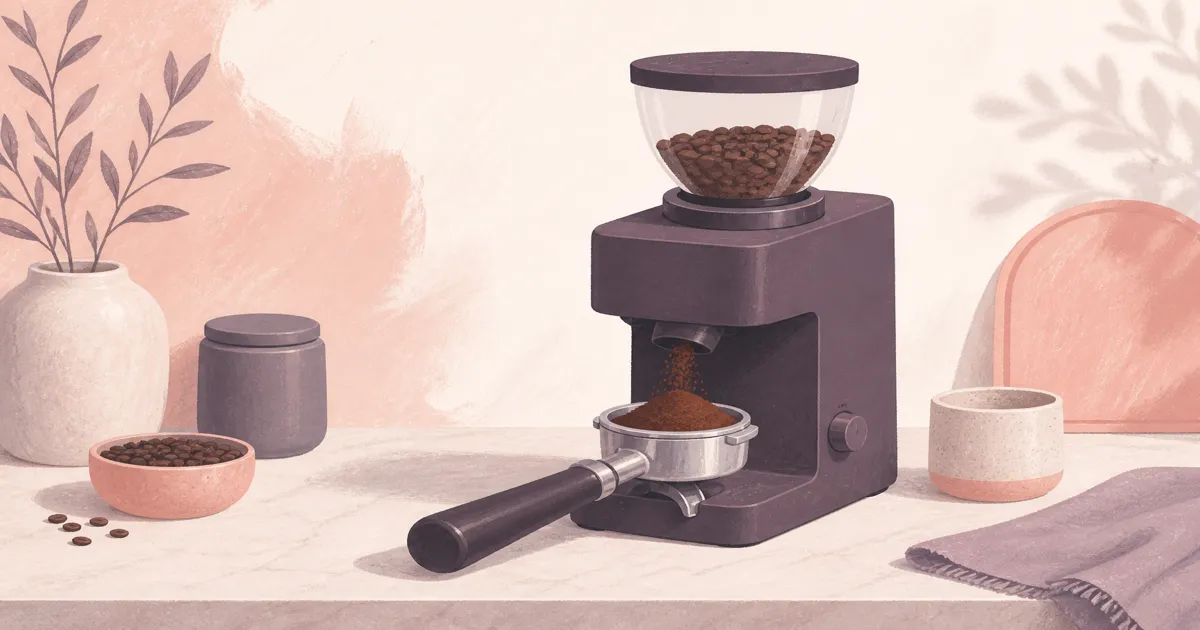
The short answer: The best burr grinder for espresso is one that reaches true fine settings with small, repeatable adjustments and low enough retention that your dose matches what you weighed.
Home espresso fails most often at the grinder, not the shiny machine. If particles are uneven or you cannot move a half-step finer, every basket and tamp trick fights the same wall.
This guide focuses on espresso-capable burr grinders for home counters. It is based on specs and common buyer outcomes, not a claim of lab testing every model. For general brew matching, see best coffee grinder. Machine context lives in best espresso machine and the beginners guide.
What espresso demands from burrs
Espresso pushes water through a packed puck at high pressure. The grind must be fine enough to create resistance, and even enough that water does not cut a fast lane through one side.
That means:
- Fine range: Drip-only mills often stop too coarse.
- Resolution: You need small changes when a shot runs two seconds fast.
- Consistency: Random fines and boulders make salty-sour chaos in the same cup.
- Predictable workflow: If the setting wanders when you lock the collar, dial-in never sticks.
Crema photos are not the goal. Repeatable taste is.
Electric vs hand for espresso
Electric espresso grinders win for speed and daily doubles. Look at burr diameter claims carefully: bigger is not automatically better at home, but cheap tiny burrs can struggle with heat and speed.
Hand grinders can produce excellent espresso particle distributions in a small footprint. They cost less noise and often less money than premium electrics. They cost forearm time. If you make three milk drinks before work, be honest about that.
Either path beats a blade grinder for espresso. Do not spend months blaming your machine while chopping beans with a propeller.
Retention, single dose, and stale mix
Retention is coffee left in the grinder after you stop. High retention means the first grams of a new coffee are yesterday’s beans. For espresso doses around 15–20 g, a few grams stuck inside is a big percentage error.
Mitigations people actually use:
- Single-dose with a bellows or brush
- Purge a little when changing coffee
- Avoid leaving hoppers full of oily beans for weeks
If you rotate light and dark roasts, retention discipline matters more. If you drink one coffee for a month, it matters less, but weighing still helps.
Dial-in without folklore
Use a scale. Dose in, beverage out. Start near a 1:2 ratio in the 25–35 second window as a learning lane, then taste. Sour and fast usually wants finer. Bitter, dusty, and slow often wants coarser. Channeling (jet streams, pale streaks) wants better distribution and a level tamp as much as a grind change.
Change grind in small moves. Wait for the machine to be fully heated. Keep basket cleanliness boring and consistent. Fancy needles and distributors can help later; they do not replace a capable mill.
Medium roasts forgive beginners. Competition light roasts punish loose workflows. Save those for after your notes look stable.
Pairing with machines and baskets
A pressurized basket can mask a mediocre grind for a while. That is fine while you learn. When you move to a non-pressurized basket, grinder quality shows up immediately. Plan the purchase order: grinder first or alongside the machine, not as an afterthought.
If you are still choosing hardware, the beginner espresso machine guide covers baskets and expectations. Milk texture is separate; see best milk frother when the wand is the bottleneck.
How to shop without drowning in forums
Ignore prestige hierarchies long enough to check:
- Can it grind fine enough for espresso on real reviews with your machine class?
- Are adjustment steps small enough to correct a 5-second miss?
- Can you clean the burr chamber without a weekend project?
- Are spare burrs sold?
- Does the workflow fit your mornings (hopper vs single dose, noise, size)?
Forum drama about “prosumer or nothing” skips people who just want tasty milk drinks before work. Buy the best burr grinder for espresso that you will use daily, keep clean, and can adjust without dread.
Static, clumping, and small fixes
Fine espresso grounds clump, especially in dry winters. A tiny spritz of water on the beans before grinding (RDT) or a simple WDT tool in the basket can even the puck. These habits are cheap compared with another machine upgrade.
If the grinder sprays static all over the counter, check whether a bellows, catch cup, or grounded workflow is part of the design. Mess that makes you skip weekday shots is a real product flaw for your kitchen, even if the particle graph looks pretty online.
Signs your current grinder is the limit
You choke the machine at the finest setting and still run fast when you open one click. You cannot find a middle setting that holds for more than a day. You weigh 18 g in and only 15 g reaches the basket. Those are grinder problems. Tampers and fancy baskets will not invent resolution that is not there.
If your shots are already tasty and stable, keep the mill. The best burr grinder for espresso is the one that disappears into a boring morning routine.
After the grinder is stable, a matching espresso tamper and a simple knock box keep the counter usable. More reading sits on the blog. The homepage is the map back to machines and accessories.
Frequently Asked Questions
What makes the best burr grinder for espresso different from a drip grinder?
Espresso needs finer particles and tighter adjustment. Many drip grinders cannot go fine enough, or they jump too far between clicks.
Flat or conical burrs for home espresso?
Both can make great shots. Conical models are common in home espresso kits. Flat burrs appear in many electric grinders. Judge alignment, adjustment, and workflow over brand mythology.
How important is stepless adjustment?
Helpful, not magic. Stepped grinders with fine increments can dial in well. Huge step gaps are the real problem.
Can one grinder do espresso and pour-over?
Some can. Expect compromises: slower filter grinding, more cleaning when you swing between settings, or average results at one end. Dedicated espresso focus is simpler if shots are daily.
Why do my shots swing day to day on the same setting?
Beans age, humidity shifts, and retention mixes old grounds. Weigh dose, purge stale grounds, and nudge grind in small moves.