Best French Press for Home: Size, Mesh, and Daily Cleanup
The best French press is a sturdy carafe with a tight mesh screen, a size that matches how many cups you actually pour, and a lid you will clean every day.
By Nate Brooks
Baristapicks is reader-supported. As an Amazon Associate we earn from qualifying purchases. Learn more.
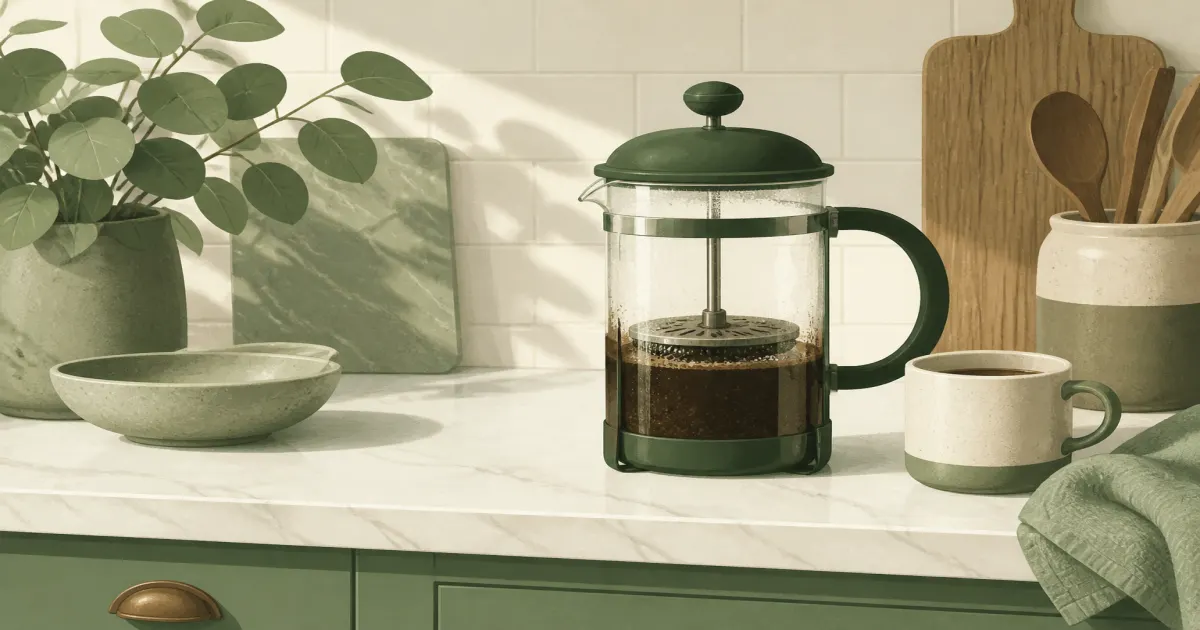
The short answer: Buy a French press with a solid mesh filter, a carafe size you will fill most days, and parts you can rinse in under a minute. Flavor comes from grind and timing more than brand logos.
A French press is immersion coffee. Coarse ground coffee sits in hot water, then you press a screen to the bottom and pour. It is simple, forgiving, and easy to overfill with sludge if the grind is wrong.
This guide is buying and brew advice from common home setups, not a lab ranking of every listing. Pair it with a coffee grinder that can hold a coarse setting, and keep pour-over gear on the side if you want cleaner cups later.
What “best” means for a French press
Skip cafe cosplay. You want:
- A mesh screen that fits the carafe wall so grounds stay down.
- A handle and lid that stay cool enough to pour without drama.
- A size that matches weekday volume, not a party you throw twice a year.
- Parts you can take apart and rinse without a toolkit.
Price jumps often buy thicker glass, better lids, or insulated steel. They do not fix a grind that is too fine.
Glass vs stainless steel
Glass carafes are honest. You see bloom, color, and how much you filled. They chip if you bang the sink. They lose heat faster than steel.
Stainless presses keep coffee hotter and shrug off backpacks or picnic tables. You cannot see the slurry as clearly. Some lids feel fiddly until you learn the seal.
Plastic bodies show up on budget kits. Fine for dorm trials. Replace if the plastic smells like last week’s dark roast.
Buy glass if the press lives on a counter. Buy steel if it moves rooms or you hate lukewarm second cups.
Mesh filters and sludge control
The metal mesh is the product. A loose rim lets fines sneak into the cup. A double mesh helps, but grind still matters more.
Start medium-coarse, like rough sea salt. If the cup tastes hollow and thin, go a touch finer. If it tastes muddy and the plunger fights you, go coarser.
After you plunge, pour soon. Coffee sitting on compacted grounds keeps extracting bitter notes. Leaving a half-full press on the stove for an hour is how people decide they “hate French press.”
Some people pour through a paper filter into a second mug for a cleaner cup. That is optional cleanup, not required gear.
Size and brew ratios
Label sizes are messy. An “8-cup” press often means eight tiny cups, not eight American mugs. Check milliliters on the box.
A practical home ratio is about 1:15 coffee to water by weight (for example 30 g coffee to 450 g water). Adjust to taste. Weighing beats scoop guessing once you care about repeat cups.
Fill only what you will drink in the next 20 minutes. Brewing a huge batch “for later” and reheating it is how French press gets a bad reputation.
Heat, time, and water
Heat water to roughly 195–205°F (90–96°C). Boiling straight onto grounds can taste harsh for light roasts. Cool 30 seconds off boil if you lack a thermometer.
Steep about four minutes as a default. Stir once at the start so dry clumps disappear. Plunge slowly. Fast plunges splash and push fines past the screen.
Water quality matters. If your tap tastes like a pool, use filtered water. Fancy kettles do not fix chlorine.
Cleaning without quitting the method
Rinse the screen every brew. Oils build up and turn rancid. Weekly, take the mesh stack apart and scrub with mild soap.
Do not leave wet grounds overnight if you can help it. Empty into compost or trash while damp, then rinse. A brush helps when mesh is clogged.
Dishwashers vary. If the maker says top rack only, believe them. Warped lids ruin the seal.
When a French press is the wrong buy
Want crystal-clear cups with bright acidity? Prefer pour-over. Want push-button espresso drinks? Look at machines in the espresso guides, not a press.
If you only drink milk drinks, a press can still brew a strong base, but foam tools matter more. Read the frother notes before stacking three brew methods you will not use.
Travel kits and camping presses exist. For this site, pick a countertop press first. Add a steel travel model later if you actually leave the kitchen with it.
A simple weekday routine
- Grind coarse just before brew.
- Add coffee, then hot water. Stir once.
- Lid on, screen up. Wait four minutes.
- Plunge slowly. Pour into a mug or thermos.
- Rinse the mesh before the grounds dry into cement.
That routine beats chasing “secret” ratios from social videos. The best French press is the one that survives that loop without leaking or cracking.
Beans, roast, and dose habits
Medium and medium-dark roasts are the friendliest French press starters. Very light roasts can taste sharp in immersion unless you grind carefully and keep water off a rolling boil. Very dark oily beans leave more residue on the mesh, so rinse sooner.
Buy whole beans and grind for the brew you are about to make. Pre-ground “press” bags work in a pinch, but they go stale fast once opened. Store beans in a sealed container away from the stove’s heat.
If you share the kitchen, label the press dose you like on a sticky note inside a cabinet. Guests often dump scoops until the carafe looks “full,” then blame the method when the cup is heavy and bitter.
Buying checklist
- Carafe size matches your real mugs.
- Mesh feels snug in the cylinder.
- Lid and plunger move smoothly when wet.
- You own or will buy a grinder with a true coarse range.
- You will rinse it daily. If not, choose a simpler drip maker.
Deciding between press and pour over for the same beans is normal. Keep both only if you use both. Otherwise pick the cup you finish on busy mornings and let the other method wait.
More brew and espresso writing lives on the blog. Start from the homepage when you are mapping a full home setup.
Frequently Asked Questions
What size French press should I buy?
Match the carafe to your usual batch. An 8-cup press is enough for two large mugs. Go bigger only if you brew for a table and will fill it most mornings.
Glass or stainless steel?
Glass shows the brew and is easy to judge. Steel travels better and keeps heat longer. Both work if the mesh fits and the plunger seals.
Why is my French press muddy?
Grind too fine, steep too long, or pour without letting fines settle. Use a medium-coarse grind, four minutes as a start, and pour soon after you plunge.
Do I need a special kettle?
No. Any kettle that reaches about 200°F (93°C) is fine. A gooseneck helps control pour speed, not French press flavor itself.
Can I make latte-style drinks with a French press?
You can froth milk in a clean press with hot milk and a few plunges, but it will not match a steam wand. See the milk frother guide for better foam tools.