Best Milk Frothing Pitcher (2026): Three Sizes That Make Sense
The best milk pitcher fits the amount you steam and gives you enough room to build a whirlpool. These three picks cover a first 12 oz jug, a handleless latte-art upgrade, and a larger pitcher for two drinks.
By Harper Lin
Baristapicks is reader-supported. As an Amazon Associate we earn from qualifying purchases. Learn more.
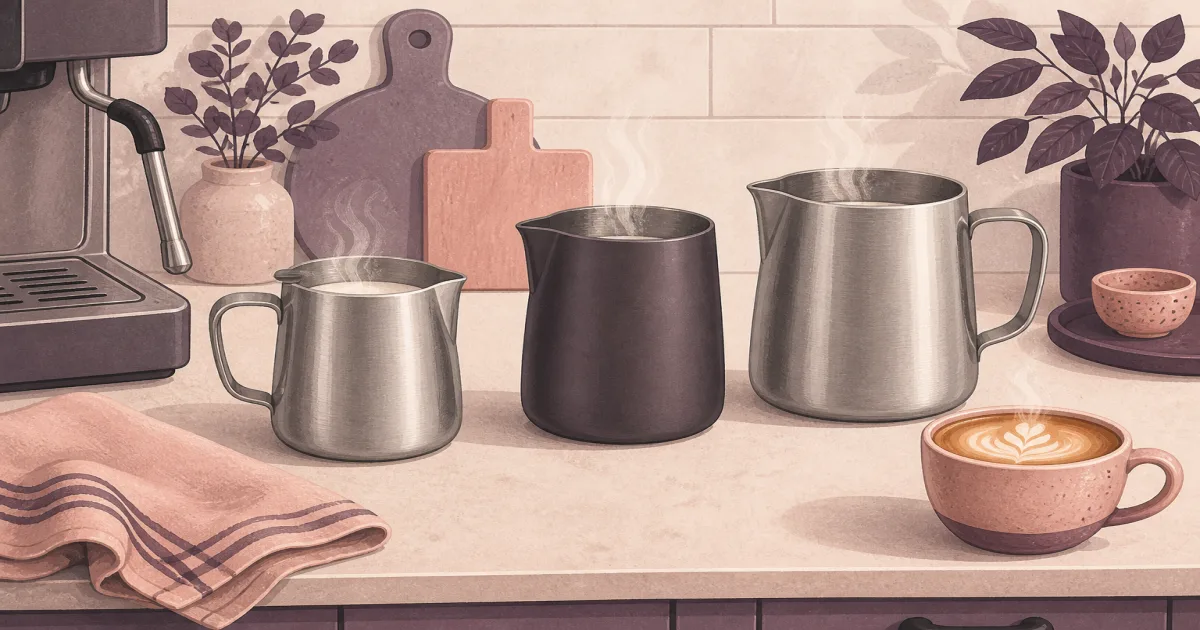
The short answer: The Zulay 12 oz milk frothing pitcher is the best starting point for most home espresso setups. Choose the Normcore 15.2 oz handleless pitcher when latte art and grip control matter most, or the ENLOY 20 oz pitcher when you regularly steam enough milk for two drinks.
Our picks
A milk pitcher looks simple, but the wrong size makes steaming needlessly difficult. Too much empty space can make a small steam wand struggle to start a whirlpool. Too little space sends expanding milk over the rim before it reaches serving temperature.
This guide is based on current US Amazon listings, product specifications, and substantive buyer-review patterns. We have not bench-tested every pitcher here. All three picks were verified as live Amazon.com listings with ratings above 4.0, established ownership feedback, and working product links.
If you are still learning the technique, read our guide to steaming milk at home alongside this comparison. The pitcher helps, but steam position and timing create the texture.
The three picks at a glance
Shop: Zulay 12 oz pitcher · Normcore 15.2 oz pitcher · ENLOY 20 oz pitcher
Best for most beginners: Zulay 12 oz milk frothing pitcher
The Zulay 12 oz stainless steel pitcher is the sensible first buy for someone steaming one cappuccino or a smaller latte. Its conventional handle gives you a familiar grip, and the internal markings make it easier to start with a repeatable amount of milk.
Twelve ounces does not mean you should fill the jug with 12 ounces of cold milk. Milk expands as air enters it. Start with much less, usually near the base of the spout, so there is room for the volume to grow. That smaller working amount is a good match for the steam power on many compact home machines.
The live US listing showed 4.7 stars from 3,389 ratings at verification. Detailed owners commonly mention the useful size, sturdy handle, easy cleanup, and clear measurement marks. A recurring complaint is that the marks can be hard to read in some finishes. That is inconvenient, not a reason to reject an otherwise practical pitcher.
Choose the Zulay if you make one milk drink at a time and want to learn without paying for a specialized latte-art jug. Skip it if your normal order is two large lattes. Splitting the work into two batches is possible, but a larger pitcher will be faster.
Check price: Zulay 12 oz milk frothing pitcher on Amazon
Best for latte art practice: Normcore 15.2 oz handleless pitcher
The Normcore handleless milk pitcher is the more focused choice for someone who already gets smooth microfoam and wants better control while pouring. A silicone sleeve wraps the body, so you hold the pitcher directly instead of using a fixed handle. That grip lets you rotate the jug into a comfortable angle and feel when the steel is getting hot.
Its 15.2 oz capacity sits between the other picks. There is enough room for a medium latte without making the pitcher feel oversized for a single drink. The round spout favors broad, flowing patterns such as hearts and tulips. It does not create latte art by itself. It simply gives a practiced pour a predictable edge.
The live US listing showed 4.7 stars from 625 ratings at verification. Substantive reviews discuss the secure sleeve, balanced shape, temperature feedback, and controlled pour. Some owners find the sleeve tight or the handleless hold unfamiliar. Those are real fit questions. If you prefer keeping your fingers away from the warm pitcher body, buy a handled model.
Choose the Normcore after milk texture is reasonably consistent and you want to work on the pour. It is harder to justify if you only want hot milk under a thick cap of foam. Our milk frother guide covers simpler ways to add foam without using an espresso steam wand.
Check price: Normcore 15.2 oz handleless milk pitcher on Amazon
Best for two drinks: ENLOY 20 oz milk frothing pitcher
The ENLOY 20 oz stainless steel pitcher gives a larger milk dose enough room to expand. It is the pick for a household that regularly makes two cappuccinos back to back, or one large latte that crowds a 12 oz jug.
Capacity is useful only when the machine can move that much milk. A compact single-boiler machine may take longer to heat a large batch, and weak steam can struggle to form a strong whirlpool. In that setup, two smaller batches may produce better texture. Machines with stronger steam have an easier time using the extra space.
The live US listing showed 4.7 stars from 2,326 ratings at verification. Detailed owner feedback frequently calls out the sturdy steel, easy cleaning, useful volume, and comfortable handle. Size confusion appears in some reviews, which is why the current 20 oz selection matters. Confirm the selected capacity before ordering because Amazon variations can change.
Choose the ENLOY if the 12 oz pitcher overflows during your normal drink routine. Skip it for a single traditional cappuccino. A pitcher that is too large for the milk dose makes it harder to keep the steam tip in the right place.
Check price: ENLOY 20 oz milk frothing pitcher on Amazon
How to choose the right milk pitcher size
Buy for the amount of milk you actually steam, not the largest drink you might make once a year. A 12 oz pitcher works well for roughly 4 to 6 oz of cold milk, depending on the drink and how much expansion you create. That covers many single cappuccinos and smaller lattes.
A pitcher around 15 oz adds breathing room for a medium latte and still feels manageable for one drink. A 20 oz pitcher is useful for two smaller drinks or one larger serving. It also needs more steam power and a little more counter space.
The spout acts as a rough fill guide. Starting near the bottom of the spout usually leaves room for stretching and rolling the milk. If the milk reaches the rim during steaming, use less or move up a size. If the steam tip cannot create a whirlpool, use less milk or a smaller pitcher.
Handle or handleless
A handle keeps your fingers away from the hot body and makes the pitcher easy to pick up. It is familiar, stable, and the right default for most beginners. The possible downside is that the fixed grip may put your wrist at an awkward angle during detailed pouring.
A handleless pitcher lets you choose any wrist angle. The sleeve provides grip and some insulation, while still giving clearer temperature feedback than a handle. It also asks you to hold a warm metal vessel directly. People with limited grip strength may prefer a conventional handle.
Neither style improves the milk automatically. Choose the one that feels secure when the pitcher is wet and full.
Round spout or sharp spout
Round spouts release a wider stream and make broad patterns approachable. They suit hearts, simple tulips, and everyday pouring. Sharper spouts narrow the stream and can help with fine lines once you already control milk flow.
Beginners should not overthink this choice. Glossy, paint-like microfoam matters more than the final few millimeters of spout shape. Start the pour higher to mix milk into the espresso, then bring the pitcher close to the surface when you want the white pattern to appear.
A simple first-use routine
Rinse the new pitcher before use. Add cold milk to around the base of the spout, purge condensation from the steam wand, and place the tip just below the surface. Introduce a little air early, then lower the tip enough to keep the milk rolling without loud screeching.
Stop before the milk becomes too hot to taste sweet. Wipe and purge the steam wand immediately. Swirl the pitcher to keep the milk and foam together, tap out large bubbles, and pour without waiting.
Clean the pitcher as soon as you finish. Dried milk hides around the spout and handle welds. Plain stainless steel is forgiving, while colored coatings should be washed according to the manufacturer's instructions.
Which milk frothing pitcher should you buy?
Buy the Zulay 12 oz pitcher if this is your first steam-wand setup and you make one drink at a time. It is affordable, easy to understand, and backed by a large review history.
Buy the Normcore 15.2 oz handleless pitcher if your milk texture is already improving and you want more freedom during latte-art pours. The sleeve, round spout, and medium capacity make it the specialist of the group.
Buy the ENLOY 20 oz pitcher if your current jug runs out of room when you steam for two. Make sure your machine has enough steam power before moving to a larger volume.
For the rest of a milk-drink setup, compare our best espresso machines for latte and espresso cups. One well-sized pitcher and consistent technique are enough. You do not need a shelf full of nearly identical jugs.
Frequently Asked Questions
What size milk frothing pitcher should I buy?
A 12 oz pitcher is the easiest starting point for one cappuccino or a smaller latte. Choose 15 to 20 oz when you make a larger drink or steam for two small drinks at once.
How full should a milk pitcher be before steaming?
Start with cold milk near the bottom of the spout, usually around one-third to one-half full. The milk needs room to expand without spilling.
Is a handleless milk pitcher better for latte art?
Not automatically. A handleless pitcher lets you rotate your grip and feel temperature through the sleeve, but a handled pitcher can pour equally good patterns with practice.
Does the spout shape matter?
A rounder spout makes broad pours and hearts approachable. A sharper spout can give more control for fine lines, but milk texture and pouring height matter more for beginners.
Can I put a stainless milk pitcher in the dishwasher?
Plain stainless pitchers are often dishwasher safe, but colored coatings and silicone sleeves may need hand washing. Follow the current listing and manufacturer instructions.