How to Descale an Espresso Machine: A Safe Home Routine
Descaling removes mineral buildup from an espresso machine's water path. The safest method is the one in your machine manual, with the right solution and a full rinse.
By Harper Lin
Baristapicks is reader-supported. As an Amazon Associate we earn from qualifying purchases. Learn more.
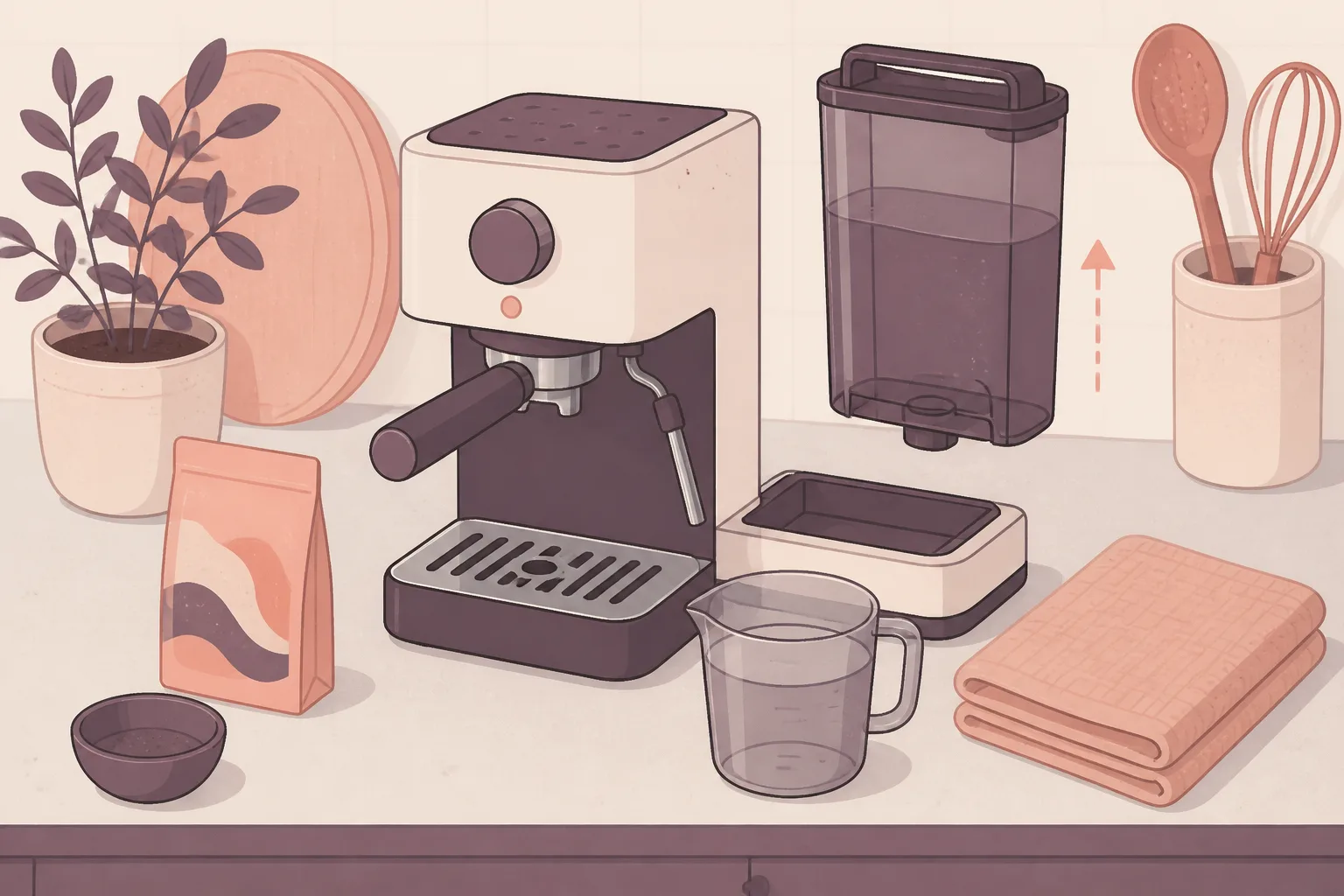
The short answer: To descale an espresso machine, use the solution and cycle your manual calls for, remove the water filter if instructed, and rinse the system fully before brewing again.
Our picks
Learning how to descale an espresso machine is less exciting than buying beans, but it protects the parts that make your coffee possible. Minerals in tap water collect in boilers, thermoblocks, tubes, and valves. Over time, that buildup can slow water flow, make temperature less stable, and trigger a service call.
The important word is safe. Every brand has its own instructions for concentration, buttons, filter handling, and rinse cycles. A general guide is useful for planning the job. Your machine manual is the final answer when the two disagree.
This guide is research-based. The listed US Amazon products are live products with review histories and ratings at or above 4.0. We have not tested every product with every machine, so check compatibility before ordering.
Descaling is different from cleaning
It is easy to mix up two different jobs. Descaling removes mineral deposits from the water path. Cleaning removes coffee oils from the group head, basket, portafilter, or brew unit.
Urnex Dezcal is for mineral scale when your manufacturer allows its use. Urnex Cafiza is for coffee oils on compatible parts and backflush routines. One does not replace the other.
If your espresso tastes stale, a clean grinder and basket may be the issue. If your machine runs slower than usual, heats inconsistently, or shows a descale alert, minerals are the more likely problem. Both jobs matter, but they happen on different schedules.
For the daily and weekly tasks around the brew group and milk wand, see how to clean an espresso machine.
When to descale
Start with your water. Very hard water builds scale faster than filtered or softer water. Your local water utility may publish a hardness report, but your machine's alerts and flow behavior are more useful day to day.
Common signs include:
- A descale or clean light that stays on
- Slower water flow than usual
- More pump noise or interrupted flow
- Water that runs cooler than expected
- A longer time before the machine is ready
Do not wait until the machine barely runs. Small, regular maintenance is easier than trying to dissolve months of buildup at once. Most homes end up descaling every one to three months, but your model may set a different interval.
Super-automatics often count drinks and water volume to decide when to alert you. They may also require a specific branded product. Follow that instruction. Their internal brew systems are more complicated than a simple semi-auto.
What you need before you start
Read the manufacturer instructions before mixing anything. Have the correct descaler, fresh water, a container large enough for the full tank, and a towel for drips.
If your machine uses a water filter, check whether it needs to come out first. Do not run a descaling solution through a filter unless the manual explicitly says to. Some machines need a special bypass piece or a specific descale mode before they will begin.
Do not use a random internet recipe because it is cheaper. Strong acids can damage seals or leave an odor that takes several rinse tanks to clear. Vinegar is especially poor as a general recommendation because several manufacturers warn against it.
The basic process
The exact buttons vary, but most home machines follow the same broad sequence:
- Empty the drip tray and remove the water filter if the manual says to.
- Mix the approved descaling solution with water at the listed ratio.
- Put a large container under the group head and hot-water outlet.
- Start the model's descale program. Do not interrupt it unless the manual tells you to refill or empty the container.
- Empty and rinse the water tank thoroughly.
- Refill it with fresh water and run every required rinse cycle.
- Reinstall the filter, reset the alert if needed, and pull a water-only flush before making coffee.
The rinse matters as much as the descaler. A little leftover solution can make the first few drinks taste sharp or chemical. If you smell the solution after the instructed rinse, run another clean-water tank.
Mistakes that cause trouble
The first mistake is treating all machines as the same. A traditional semi-auto, a capsule machine, and a super-automatic have very different water paths. Use the correct program.
The second is confusing cleaner with descaler. Cafiza can be excellent for compatible coffee-oil cleaning, but it is not the right product for mineral scale. Use each product where it belongs.
The third is skipping water care after descaling. If your tap water is hard, the mineral problem will return quickly. A filter, a suitable water source, or a more regular schedule may save more money than using stronger solution later.
Keep the routine simple
Put descaling on the same calendar as a small household task you already remember. Keep the product near your machine rather than in a garage cabinet. When your alert appears, you want the solution ready instead of postponing it for weeks.
A clean, well-rinsed machine will not fix stale beans or a weak grinder. It does keep water moving properly, which gives every other part of the routine a fair chance.
For more home coffee maintenance, read our espresso machine cleaning guide or browse the Baristapicks blog.
Frequently Asked Questions
How often should I descale an espresso machine?
It depends on water hardness and your machine. Many homes land between one and three months, but a filter and the maker's descale alert can change that.
Can I use vinegar to descale an espresso machine?
Do not make vinegar the default. It can leave odor and residue, and some manufacturers specifically advise against it. Use the solution approved in your manual.
Do I remove the water filter before descaling?
Usually, yes, but follow your model's instructions. Many machines need the filter removed or bypassed for the descale cycle.
Is descaling the same as cleaning an espresso machine?
No. Descaling targets minerals in the water system. Cleaning powder targets coffee oils on compatible brew parts.