How to Stop Coffee Grinder Static and Keep Grounds Off the Counter
Coffee grinder static is usually dry beans and a dusty chute, not a broken grinder. A tiny mist of water and regular cleaning can make a noticeable difference.
By Harper Lin
Baristapicks is reader-supported. As an Amazon Associate we earn from qualifying purchases. Learn more.
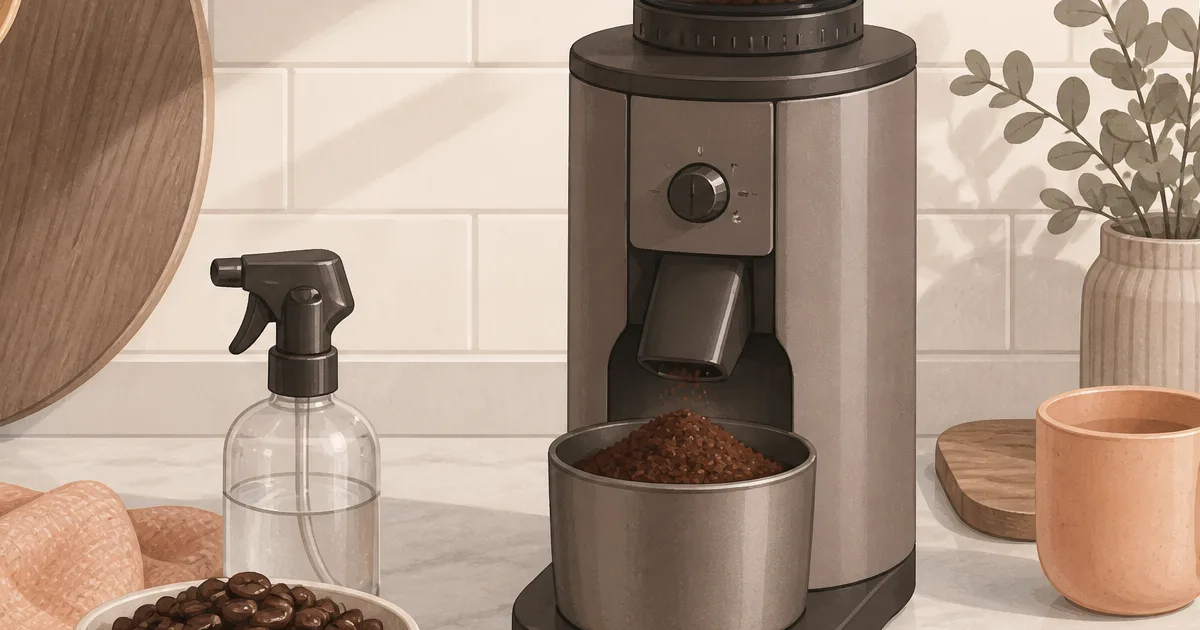
The short answer: Add one tiny mist of water to a measured dose of beans, shake them briefly, then grind. Keep the catch bin and chute clean, and do not spray water into the grinder itself.
Our picks
Coffee grinder static is the little mess that makes a good morning feel needlessly annoying. Grounds cling to the bin, jump onto the counter, and hide in places you will find later with your sleeve. It happens most in dry weather and with fine coffee particles, especially around espresso settings.
The fix is usually simple. You do not need to replace a working grinder just because the grounds are acting like they have a personal objection to your kitchen. Start with a clean dose path, then use a tiny amount of moisture on the beans before they go in.
Try the RDT method first
RDT stands for Ross Droplet Technique. The name sounds more elaborate than the routine. Before grinding a single dose of coffee, give the beans one light mist from a clean spray bottle. Shake or stir the beans so the moisture spreads across the surface, then add them to the hopper or single-dose cup.
The beans should not look wet. You are not washing them. One small spray is enough for a typical 18-to-30-gram dose. If you do not have a mister, touch a spoon handle to a drop of water, stir the beans once, and use that barely damp handle to move them around.
Never spray water directly into the hopper, burr chamber, chute, or motor. The moisture belongs on the beans before they enter the grinder. Sending water into the machine is a good way to create a much worse problem than a messy counter.
Clean the grounds that are already sticking
Static gets worse when old fines coat the inside of the chute and catch bin. Unplug the grinder, empty the hopper, and use a dry brush to clear loose coffee from the exit path and bin. Wipe the outside with a dry microfiber cloth.
For a deeper clean, follow your grinder manual. Many machines let you remove the upper burr, but the parts need to go back in the right order. Our coffee grinder cleaning guide walks through the safe home routine.
The Baratza Encore ESP Coffee Grinder is a useful example of a grinder with accessible upper-burr maintenance. It still can make a little static with fine grounds, particularly in dry homes, but a clean chute and a light RDT mist make the workflow easier. We use current US listing information and substantive buyer-review patterns for this product context.
Check your beans and the room
Very dry beans create more static. Coffee that has sat open for a long time can also behave differently from a fresh bag. Keep beans sealed and buy an amount you can finish in a few weeks. Our coffee storage guide covers the basics if the bag is constantly sitting open beside the grinder.
Winter heating and air conditioning both dry out a room. If static appears only in one season, your grinder may be fine. The RDT step is often enough during the dry months. You do not need to run a humidifier next to the coffee station unless the rest of the room needs one too.
Plastic catch bins can hold more static than metal dosing cups. That does not mean a plastic bin is unusable. It means you may want to tap it gently, use the lid as a funnel, or brush it out more often. Do not bang a fragile bin against the counter.
Keep the dose repeatable
Static is mostly a mess problem, but it can affect consistency if grounds stick in the chute and appear in the next dose. This matters most for espresso, where a gram or two of old coffee can change a shot.
Weigh the beans before grinding, then weigh the grounds after if you want to understand how much stays behind. If the difference is large, clean the chute and check whether the grinder needs a small purge. For more help keeping settings steady, read our coffee grinder calibration guide.
Avoid adding a big blast of water to force every ground out. Too much moisture can make grounds clump, and damp coffee inside a grinder is not a good long-term habit. The best routine is a tiny mist, a brief shake, and regular dry cleaning.
When static points to another issue
If a grinder suddenly throws much more coffee than usual, inspect the catch bin, lid, chute, and burr seating. A cracked bin, loose hopper, or dirty burr chamber can make the problem look like static. If the grinder sounds different or its adjustment collar will not hold position, stop and check the manual before taking it apart.
Static cannot explain every poor cup. If espresso is sour or runs too fast, you probably need a grind adjustment rather than a spray bottle. If coffee tastes stale, clean the grinder and check the beans. Keep each problem separate so the solution stays simple.
Bottom line
To stop coffee grinder static, add one tiny mist of water to a measured dose of beans, keep the chute clean, and avoid spraying inside the machine. It takes less than a minute and can save a surprising amount of counter cleanup. Find more practical grinder help on the Baristapicks blog or visit the homepage for the broader setup.
Frequently Asked Questions
Why does my coffee grinder create so much static?
Dry air, dry beans, plastic catch bins, and coffee dust in the chute can all create a charge that makes grounds stick.
Does spraying water on coffee beans damage a grinder?
A very tiny mist on the beans before grinding is commonly used. Do not spray water into the grinder, hopper, burrs, or motor.
How much water should I use for the RDT method?
Use one very small spray or a damp spoon handle for a single dose. The beans should not look wet.
Will cleaning my grinder reduce static?
Often, yes. Old fines in the chute and catch bin give fresh grounds more places to stick.
Can static change coffee flavor?
Static itself does not change flavor, but lost grounds and uneven retention can make a dose less repeatable.
Do anti-static grinders eliminate the problem?
They can reduce it, but dry weather and oily residue still affect how grounds behave.