How to Clean a Coffee Grinder Without Damaging It
A clean coffee grinder makes your settings easier to trust and keeps old grounds out of the next cup. Most home grinders need a brush, a dry cloth, and a little patience.
By Harper Lin
Baristapicks is reader-supported. As an Amazon Associate we earn from qualifying purchases. Learn more.
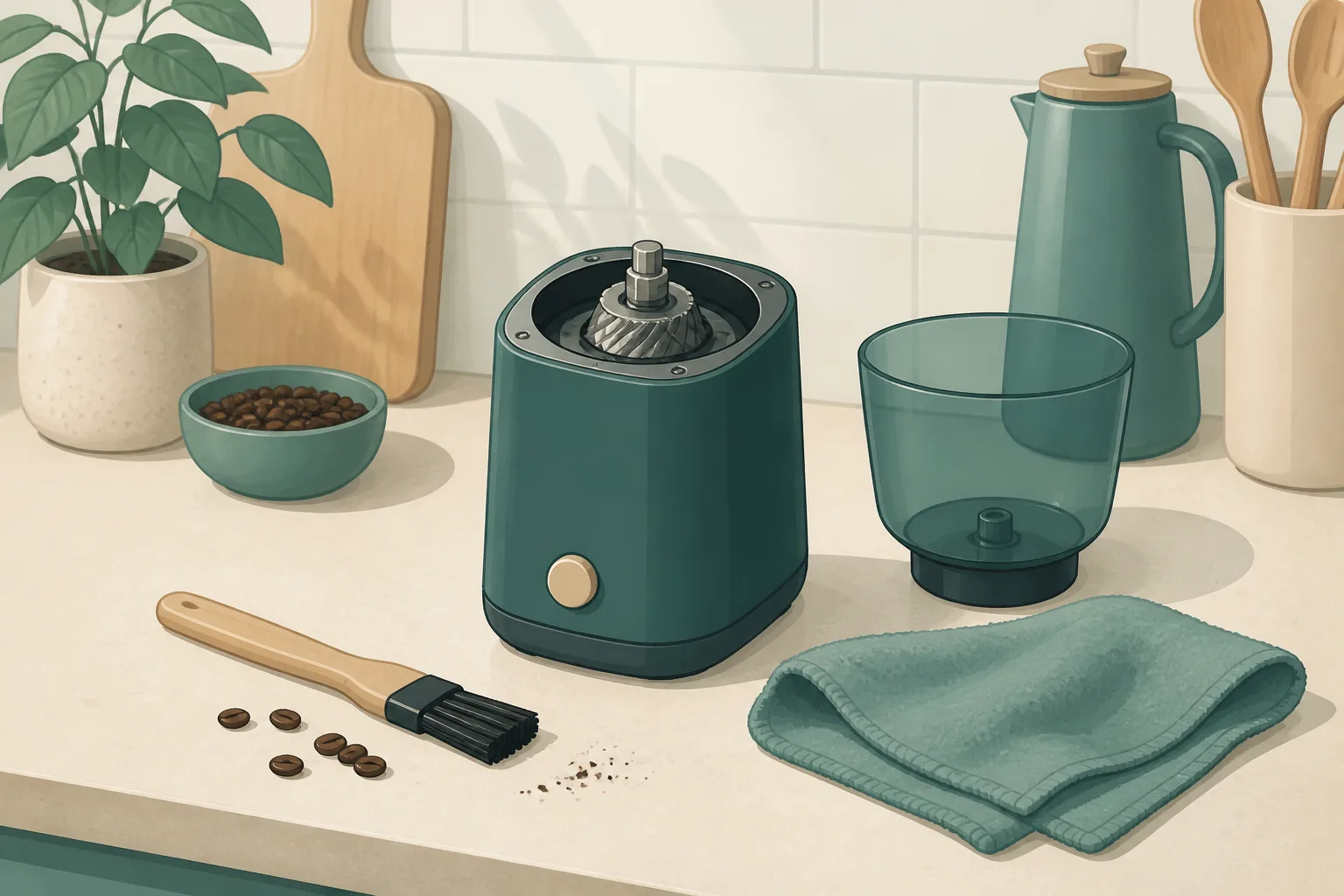
The short answer: To clean a coffee grinder, unplug it, empty the beans, brush out loose grounds, clean the removable burr area dry, and put it back together exactly as the manual shows.
Our picks
Coffee grinders collect more old grounds than most people expect. A few grams can sit in the chute, burr chamber, and catch cup. That is not a disaster if you use one coffee every day. It becomes noticeable when you switch beans, chase an espresso setting, or start tasting stale, oily notes in an otherwise fresh bag.
Knowing how to clean a coffee grinder helps you keep its settings predictable. It also gives you a quick chance to spot a worn hopper, stuck grounds, or a burr that is not seating correctly.
This guide is for typical home burr grinders. It is research-based, not a substitute for your exact manual. The listed US Amazon picks are live products with ratings at or above 4.0 and established customer-review histories.
Start with a dry clean
Unplug an electric grinder before touching the burrs or chute. Empty the hopper, run it briefly only if the manual allows you to clear the last beans, then unplug it again.
Take off the hopper and catch cup. Use a small dry brush to sweep loose grounds from the hopper, the top of the burr chamber, and the exit chute. A dry microfiber cloth works for exterior dust and oily fingerprints.
Do not spray cleaner into the motor area. Do not rinse an assembled grinder under the tap. Water and fine coffee dust make a paste that is harder to remove, and moisture can rust steel burrs.
For many homes, this quick clean is enough every week or two. If you use oily dark beans or change from decaf to regular coffee often, do it more frequently.
How to clean removable burrs
Many home grinders let you lift out the upper burr. Check your manual for the correct release method. Do not force it. Some adjustment collars and burr carriers have small parts that need to go back in a particular order.
Once the upper burr is out, brush the burr teeth and the surrounding chamber. Turn the grinder upside down only if the manual says it is safe. You do not want loose grounds falling into the motor.
Leave the lower burr alone unless your manual includes removal instructions. It often needs a specific tool or a careful reassembly process. A dry brush around it is usually enough.
The Baratza Encore ESP is one example of a grinder with an accessible upper-burr workflow. The 1Zpresso JX-Pro S shows the other approach: a compact hand grinder with a smaller, simpler dose path. Neither is maintenance-free. Both make it easier to see what you are cleaning.
What not to use
Avoid water, dish soap, and wet wipes on burrs unless the manufacturer clearly approves them. Steel can rust, and residue can collect coffee dust later.
Also avoid uncooked rice as a default cleaning method. It is a common tip, but it can strain some grinders and is not approved for every burr set. Purpose-made grinder tablets can be useful only when the manufacturer says they are compatible.
If the hopper is removable and the manual says it is washable, wash it separately and let it dry completely. Never put a damp hopper back on the grinder.
Why old grounds affect espresso
Espresso uses a small dose, often around 18 grams. If one or two grams of yesterday's coffee are stuck in the chute, that is a meaningful part of the next shot. It can make a new coffee taste muddled and make your grinder setting feel inconsistent.
This is called retention. Some grinders retain more than others, especially hopper designs with long chutes. A quick purge before a fresh espresso dose can help. Cleaning the chamber keeps that purge smaller and more predictable.
For filter coffee, the effect is often less dramatic because the doses are bigger and the grind is coarser. It is still worth cleaning when the grinder smells rancid or sprays more grounds than usual.
A simple maintenance schedule
Keep the schedule realistic. A three-minute brush-out you actually do is more useful than a deep clean you postpone for six months.
Put it back together carefully
Before reassembling, make sure every part is dry and seated as the manual describes. Check that the grind collar returns to its original position. With espresso grinders, a small change in burr seating can move your normal setting.
After cleaning, grind a small amount of coffee and discard it if you removed a lot of old grounds. Then make one familiar recipe before deciding whether your settings have changed. If the shot suddenly runs very fast or very slow, check that the burr carrier is fully seated.
Clean gear is not glamorous, but it makes your espresso grinder easier to use and your next bag easier to judge. Browse more care and buying help on the Baristapicks blog.
Frequently Asked Questions
How often should I clean a coffee grinder?
Brush out loose grounds every week or two. Clean the burrs more often if you use oily dark roasts or change coffees frequently.
Can I wash coffee grinder burrs with water?
Usually no. Water can cause steel burrs to rust and can damage nearby electronics. Use a dry brush unless the manufacturer says a part is washable.
Why does my clean grinder still smell like old coffee?
Oils can cling to the hopper and chute. Empty the hopper, brush the burr chamber, and wipe removable plastic parts only as the manual allows.
Should I use rice to clean a grinder?
Do not use uncooked rice unless your manufacturer explicitly says it is safe. It can strain some grinders. Use approved cleaner or a brush instead.