WDT Tool for Espresso: How to Stir for Even Shots
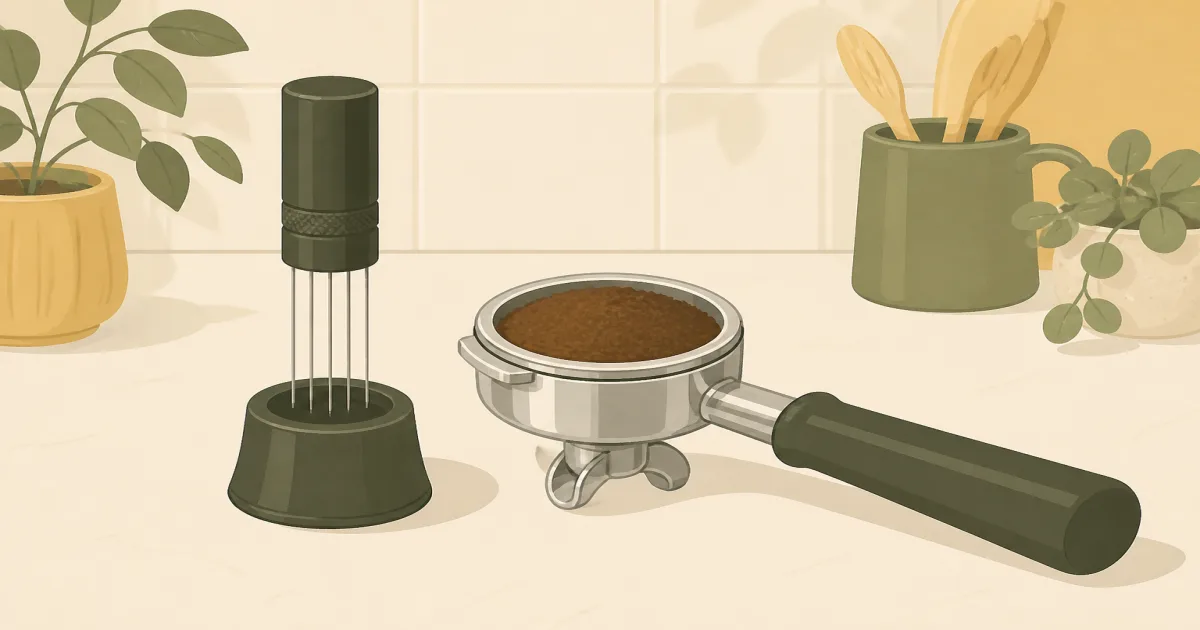
A WDT tool breaks up clumps in the portafilter before you tamp. Thin needles and a light hand matter more than fancy handles.
By Nate Brooks
Baristapicks is reader-supported. As an Amazon Associate we earn from qualifying purchases. Learn more.
Our picks
Clumps are tiny dry sponges. Water finds the soft path around them and leaves bitter or sour patches. Needle stirring is a cheap way to interrupt that story before the tamp locks it in.
You do not need a $100 toy to do this. You need thin needles, a habit, and a place to put the tool down safely.
Why WDT helps at home
Home grinders often drop fluffy clumps, especially at fine espresso settings. If you tamp those clumps flat, you compress uneven density into the puck. The shot may look fine and still taste hollow or harsh.
A few seconds of needle stirring mixes the bed. Then a level tamp has a fairer chance. Pair this with a tamper that fits and a knock box so the whole loop stays clean.
How to use a WDT tool
- Dose into the portafilter or dosing cup, then transfer.
- Hold the basket steady.
- Insert the needles into the grounds.
- Stir in slow circles and gentle figure-eights for a few seconds.
- Sweep the surface level with a finger or distributor if you use one.
- Tamp straight down.
- Optional: add a puck screen if that is part of your routine.
Stay out of the basket floor. Digging hard against the metal can bend needles and carve channels. Think fluff, not excavation.
Daily driver: MEION WDT
The MEION WDT Espresso Distribution Tool is the one we treat as the default buy. The 0.35mm needles are thin enough to break clumps without acting like fence posts. Extra needles in the tube matter once one bends. The stand keeps the points off the counter.
Store it where nobody grabs blindly. Those needles are sharp.
Wood handle option: Woouch
If you want wood next to walnut accents, the Woouch WDT is a solid second choice. Removable needles let you run fewer pins if a denser forest feels clumsy in a small basket. Same basic method: light stir, then tamp.
WDT vs distribution discs
A spinning distributor levels the top. WDT works deeper on clumps. Many people use both. If you only buy one accessory this month, WDT usually teaches more about what your grinder is dumping.
If your grinder is the real problem, fix that next. See best burr grinder for espresso before you collect more toys.
Common mistakes
Stirring forever. Ten seconds is plenty. Over-stirring can create a fluffy mess that collapses oddly under the tamp.
Pressing like a whisk. Light hands. Let the needles do the work.
Ignoring dose scatter. Wipe the rim before you lock in. Grounds on the gasket cause leaks that look like channeling.
Buying thick craft pins. Thick needles plow. Look for roughly 0.3–0.4mm class tools.
A simple week of practice
Use the same beans and dose for five mornings. Add WDT every day. Change only grind if the shot time is clearly wrong. Taste for fewer random bitter spikes. That is the signal the tool is earning counter space.
Beginners can learn this early. It is cheaper than another machine upgrade. For machine choice itself, start with best espresso machine for beginners if you are still shopping.
Basket size and needle length
Match the tool to your basket depth in a practical way. Needles should reach into the bed without scraping the floor on every stroke. If your basket is shallow, use a lighter hand and fewer vertical plunges.
54mm and 58mm baskets both work with the same needle tools. The difference is how much coffee you are stirring, not a special “54mm WDT” marketing label. Keep the portafilter stable on a tamping mat or fork so you are not chasing a tipping basket across the counter.
When WDT will not save the shot
If grind is two notches too coarse, WDT will not invent espresso. If beans are stale, WDT will not invent sweetness. If the basket is overfilled and the screen or shower bolt hits the puck, fix dose before you stir harder.
Use WDT as part of a short checklist: dose, stir, tamp, brew, taste, adjust one variable. That discipline beats a drawer full of unused gadgets. When you are ready for the next small upgrade, a puck screen is a common next step, not a required one.
Travel kits and second stations
If you keep a second machine at a office or cabin, a compact WDT travels better than a heavy distributor. Needle tools are light. Pack the stand or a small tube so points do not poke a bag.
At home, leave the tool in the same spot every day. Habits stick when the needles are already in reach before the first yawn. That tiny bit of friction removal is why stands matter more than people admit.
Bottom line
A WDT tool for espresso is a small habit with a real payoff when your grinder clumps. Stir lightly, tamp level, and rinse the routine into muscle memory. The MEION tool is our daily driver. The Woouch wood version is a good alternate.
More prep and machine guides sit on the blog. Visit the homepage when you want the full list of Baristapicks articles.
Frequently Asked Questions
What is a WDT tool in espresso?
WDT means Weiss Distribution Technique. The tool is a set of thin needles you stir through the grounds to break clumps before tamping.
Do I need a WDT tool if my grinder is good?
Not always. Clumpy grinders benefit more. Even good mills can clump with oily or very fine espresso settings, so many people keep a WDT nearby.
How many needles should a WDT have?
Anywhere from about 5 to 10 thin needles works. Depth and a light touch matter more than needle count marketing.
Should I WDT before or after leveling tools?
Stir first to break clumps, then level or tamp. A heavy distributor on a clumpy bed can press tunnels into place.
Can WDT fix a bad grind size?
No. If the shot is far too fast or choked, change grind. WDT helps evenness inside a sane grind window.