AeroPress (2026): Who Should Buy It, and How to Brew It Well
The AeroPress is the right buy when you want a fast, clean cup with almost no counter footprint. Skip it if you need a shared carafe for two people every morning.
By Harper Lin
Baristapicks is reader-supported. As an Amazon Associate we earn from qualifying purchases. Learn more.
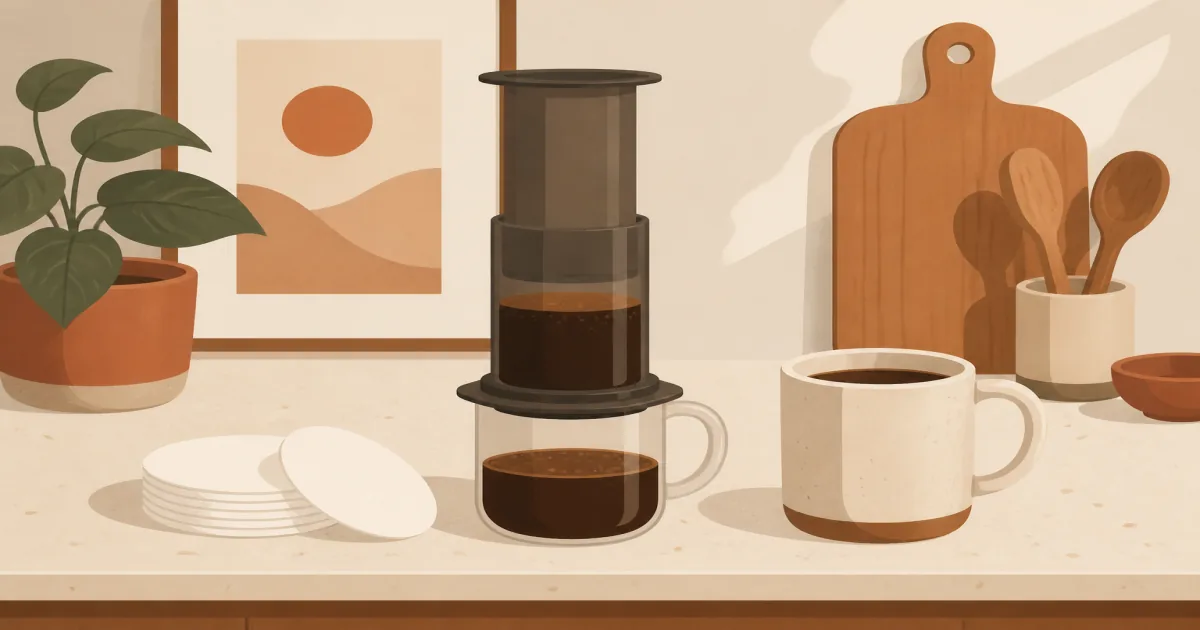
The short answer: Buy the AeroPress Original (paid link) if you want a clean weekday cup that takes about two minutes and rinses in the sink. Choose a Chemex when you need a shared carafe, or a French press when you want fuller body and do not mind sediment.
Our picks
The AeroPress is a plastic chamber, a plunger, and a paper filter cap. You add coffee and hot water, stir, wait briefly, then press into a mug. The paper filter catches fines that a metal mesh would let through. That is why many people call the cup cleaner than French press even though both use immersion.
If you are comparing brew methods first, start with the broader pour over coffee maker guide. This page is for buyers who already know they want the AeroPress itself.
Who the AeroPress fits
It fits apartments, dorms, hotel travel, and any kitchen where counter space is expensive. It also fits people who hate babysitting a slow drip and still want a brighter cup than grocery drip often delivers.
It is less convincing if your household wants one pot for two large mugs. The Original is a one-person tool. You can brew twice. Most couples get tired of that by week two.
A simple weekday recipe
Use fresh beans and a burr grinder if you can. Pre-ground works in a pinch if the bag is recent.
- Place a paper filter in the cap and rinse it with hot water.
- Lock the cap on the chamber and set the chamber on your mug.
- Add about 15 to 18 grams of medium-fine coffee.
- Pour water just off the boil to about the number 2 or 3 mark, depending on how strong you like it.
- Stir for ten seconds. Steep 60 to 90 seconds.
- Attach the plunger and press steadily for about 20 to 30 seconds. Stop when you hear the hiss.
Rinse the chamber right away. Dried coffee turns into a stubborn ring. That small habit keeps the tool pleasant instead of sticky.
Water, dose, and common taste fixes
If the cup tastes sour and thin, grind finer, use hotter water, or steep longer. If it tastes bitter or hollow, grind coarser or shorten the steep. Change one thing at a time.
Do not chase cafe espresso pressure with a violent press. A firm, even push is enough. Forcing the plunger usually means the grind is too fine or the filter is clogged.
AeroPress vs Chemex vs French press
The AeroPress wins on speed and cleanup. The Chemex wins when you want a clear carafe for guests or a longer pour ritual. French press wins when you want heavier body and you are fine with more sediment.
None of those tools replaces espresso. If milk drinks and crema are the goal, read the espresso machine hub instead of forcing the AeroPress into that job.
Filters, metal inserts, and spare parts
Paper micro-filters are part of the taste. Metal inserts exist and let more oils through. Start with paper so you learn the default cup. Keep a spare pack of filters so an empty box does not kill the habit.
The Original ships with a scoop and stirrer. You do not need a specialty stand on day one. A mug and a kettle are enough.
Inverted method vs standard method
You will see two camps online. Standard brewing puts the chamber on the mug, coffee and water in, then the plunge. Inverted brewing starts with the plunger in and the chamber upside down, then you flip onto the mug before pressing.
Standard is enough for weekday coffee. It is safer and harder to spill. Inverted can reduce early drip-through and give you a longer steep window. Try standard for a week before you chase inverted recipes. Most taste problems are grind and dose, not flip technique.
Travel, office, and second kitchens
The AeroPress packs into a small bag with a zip pouch of filters and a few days of beans. That is why it shows up in hotel rooms and office kitchens. Bring a mug that fits the chamber base. Hotel cups with thick rims can be awkward.
If the office only has a blade grinder, accept a coarser cup and keep expectations honest. The tool still beats most shared drip pots. At home, store it assembled or nested so the next brew is one rinse away.
Beans that behave well
Medium and medium-dark roasts are forgiving. Very light roasts can taste sharp unless you grind finer and steep a bit longer. Oily dark beans can clog paper filters faster. If the press gets hard mid-plunge, stop, loosen the grind next time, and do not force the plunger through a clogged filter.
Fresh beans help more than fancy accessories. A week-old bag from a local roaster usually beats a six-month grocery can.
Bottom line
The AeroPress Original is still the smart buy for solo weekday coffee when you want speed, a clean cup, and a tool that packs into a bag. Brew for two every morning? Look at Chemex or drip instead. Want espresso texture? Buy a machine and a grinder, not a press with espresso in the marketing copy.
More brew guides live on the blog. The homepage ties machines, grinders, and brew gear together when you are ready to expand the setup.
Frequently Asked Questions
Is the AeroPress worth buying in 2026?
Yes, if you want a fast weekday cup with less grit than a French press and less pour choreography than a classic dripper. It is still one of the most practical home brew tools on a small counter.
Who should skip the AeroPress?
Skip it if you brew for two people from one vessel every morning. A Chemex or drip machine is the better shared pot.
Is AeroPress the same as pour over?
Not really. You immerse the grounds, then press through a paper filter. The cup can taste clean like pour over, but the workflow is closer to a press.
What grind should I use in an AeroPress?
Start medium-fine, a bit finer than drip. If the cup tastes harsh, go coarser. If it tastes thin, grind a click finer or steep a little longer.
Do I need a gooseneck kettle?
No. A normal kettle works because you are not chasing a slow spiral pour. A gooseneck still helps if you also brew cone pour over.
Can I make espresso with an AeroPress?
You can make a strong, concentrated cup. It is not the same as pump espresso from a home machine. Treat it as its own drink.
How often should I replace the paper filters?
Use one filter per brew. Keep a spare pack nearby so you do not invent weird metal-filter workarounds when the box runs out.