Best Dual Boiler Espresso Machine (2026): When Two Boilers Matter
A dual boiler espresso machine is worth it when you pull shots and steam milk back-to-back every morning. Skip it if a fast single-boiler or all-in-one still covers your drink count.
By Nate Brooks
Baristapicks is reader-supported. As an Amazon Associate we earn from qualifying purchases. Learn more.
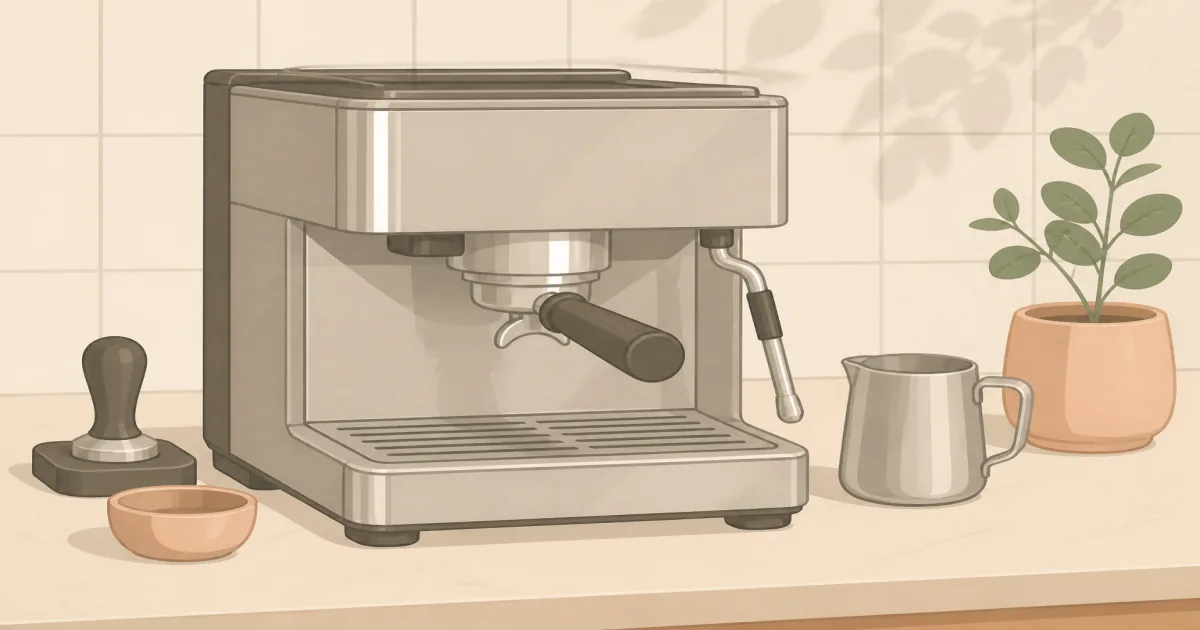
The short answer: The Breville Dual Boiler is the best dual boiler espresso machine for most US home bars that need simultaneous brew and steam. Choose the Barista Pro if one box is enough, or the Gaggia E24 if you want a cheaper 58mm learner first.
Our picks
A dual boiler espresso machine solves a specific weekday problem: you want espresso and steamed milk at the same time without babysitting temperature recovery. That is not every home. It is the right upgrade when guest brunch and back-to-back lattes are normal, not rare.
For the broader buying map, start with best espresso machine. For sub-$1000 portafilter kits, see best espresso machine under $1000. This page is for shoppers who already know dual boiler is the feature they are hunting.
Dual boiler vs everything else
Dual boiler is not automatically “better coffee.” It is better recovery and better timing under load. If your mornings are one drink, you may never feel the second boiler.
Top pick: Breville Dual Boiler
The Breville BES920XL Dual Boiler is the practical US Amazon answer for most homes that truly need two boilers. Separate brew and steam paths, PID control, low-pressure pre-infusion, and a 58mm group give you a serious weekday workflow without stepping into commercial cafe gear.
You still need a dedicated espresso grinder. Treat that as part of the purchase, not an optional accessory. Dual-boiler temperature stability cannot fix a hopper mill that cannot hold a fine setting.
Owners who like it talk about pulling and steaming without the pause that single-boiler machines force. Complaints usually land on size, price, and learning the menus. Measure counter depth. Read the water guidance. Descale on schedule.
Shop: Breville Dual Boiler on Amazon (paid link)
Comparison: dual boiler vs Barista Pro
Buy the Dual Boiler when recovery is the bottleneck. Buy the Barista Pro when you want grind and brew in one footprint and your drink count does not need two boilers.
Shop: Breville Barista Pro on Amazon (paid link)
When a Gaggia learner is the smarter first step
The Gaggia E24 (Classic-style) is not a dual boiler. It is the honest alternative when dual-boiler money is more machine than your current habit needs. You get a 58mm portafilter, a repairable path, and a reason to learn dose and steam before spending on a second boiler.
Pair it with a real espresso burr grinder. Expect warm-up and brew-to-steam waiting. That friction is the point of a learner machine. Many owners who later buy dual boilers are glad they learned on something simpler first.
Shop: Gaggia E24 on Amazon (paid link)
What dual boiler still cannot fix
A second boiler does not replace fresh beans, an even grind, or clean water. Hard water scales both boilers. A dull blade grinder still makes sour, uneven shots. A dirty steam tip still ruins milk texture.
If you are shopping dual boiler because espresso “does not taste like the cafe,” audit the grinder first. Temperature stability helps a good puck. It does not invent one.
Daily workflow that uses both boilers
Warm the machine fully before the first serious shot. Pull a short blank water flush through the group if your routine calls for it. Dose, distribute, and tamp with the same habit every morning so the dual-boiler advantage shows up as timing, not as a cover for messy puck prep.
Steam while the shot finishes when that matches your drink order. Wipe the wand immediately. Empty the drip tray on a schedule you will actually keep. Dual boilers do not forgive neglected milk residue any better than cheaper machines.
If milk drinks are the reason you want two boilers, practice pitcher technique on purpose. A strong steam boiler with weak microfoam habits still makes flat weekday lattes.
Accessories that matter more than extras
A scale helps more than a drawer of novelty tools. A decent pitcher helps more than a third knock box. A water filter or a water plan helps more than another chrome kit. Dual-boiler money is already serious. Spend the next dollars on the parts that keep shots repeatable.
For baskets, distribution tools, and cleaning gear once the machine is home, browse the wider espresso accessories guide instead of impulse-buying every gadget in one cart.
Before you order
- Confirm you actually make multiple milk drinks most days.
- Budget a dedicated espresso grinder alongside the machine.
- Measure width, depth, and tank access.
- Plan descaling for your water hardness.
- Keep packaging until the workflow fits your mornings.
Bottom line
The best dual boiler espresso machine for most home bars on Amazon is the Breville Dual Boiler when simultaneous brew and steam is the real need. Choose the Barista Pro when one box is enough. Choose the Gaggia E24 when you want a cheaper 58mm learner before that spend.
More espresso setup help lives on the blog. The homepage is the shortest path back to grinders, accessories, and brew gear.
Frequently Asked Questions
What is a dual boiler espresso machine?
It has one boiler for brewing espresso and another for steam. You can pull a shot and texture milk at the same time instead of waiting for a single boiler to switch jobs.
Who actually needs a dual boiler at home?
Households that make several milk drinks in a row most mornings. If you make one espresso or one latte, a fast single heating path is usually enough.
Is the Breville Dual Boiler worth it?
Yes when simultaneous brew and steam is the weekday bottleneck and you already own, or will buy, a real espresso grinder. It is overkill for a first casual setup.
Do I still need a separate grinder?
Yes for the Dual Boiler. Plan that spend before you celebrate the second boiler. A weak grind wastes PID and pre-infusion.
Dual boiler vs Barista Pro: which should I buy?
Buy dual boiler for true simultaneous milk drinks. Buy the Barista Pro when one box and fast heat-up matter more than dual-boiler recovery.
Is a heat exchanger the same as a dual boiler?
No. A heat exchanger uses one boiler with a tube for brew water. Dual boilers keep brew and steam temperatures more independent. Both can make great drinks; the workflow feels different.
What else do I need with a dual boiler?
A capable espresso grinder, a scale, a pitcher, and a descaling plan for your water. Dual boilers do not forgive hard water or stale beans.