Best Espresso Grinder Under $1,000: Where Extra Budget Actually Helps
The best espresso grinder under $1,000 is not always the most expensive one. Buy enough adjustment and a workflow you will be happy to use every morning.
By Harper Lin
Baristapicks is reader-supported. As an Amazon Associate we earn from qualifying purchases. Learn more.
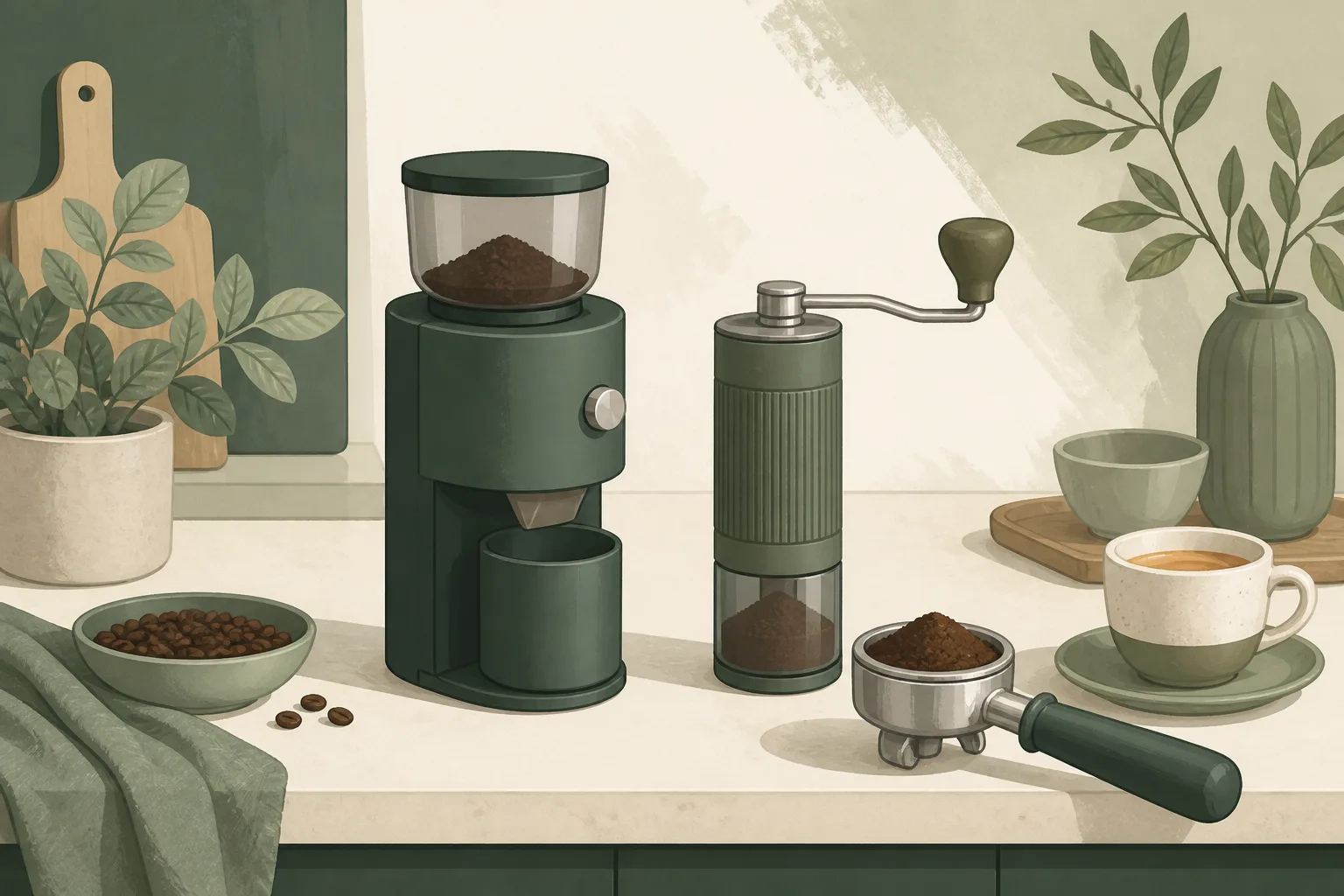
The short answer: The best espresso grinder under $1,000 gives you small enough grind changes to dial in a shot, then gets out of your way. Spend extra only when its workflow fixes a problem you actually have.
Our picks
Searching for the best espresso grinder under $1,000 can make a normal kitchen purchase feel like a technical exam. Burr size, motors, bellows, retention, and forums all start competing for your attention.
Start with a simpler question: what is currently annoying about making espresso? If shots run fast no matter what you do, you need finer adjustment. If old coffee lands in every new dose, retention matters. If you wake roommates, a quiet hand grinder or lower-speed electric model may matter more than a larger burr.
This is research-based buying guidance built from current US Amazon listings, specifications, and buyer feedback patterns. We have not bench-tested every grinder. For a broader first purchase, see our best burr grinder for espresso.
What changes as you spend more
An entry espresso grinder can make very good coffee. The important part is that it reaches espresso fineness and moves in small enough steps. A grinder that jumps from choking the machine to running too fast is not fun, even if the box says it handles espresso.
As the budget rises, you tend to get more control over three things:
- Adjustment: Smaller or stepless changes make it easier to land on a good shot time.
- Retention: Less leftover coffee means cleaner results when you switch beans.
- Workflow: Better dosing cups, quieter motors, easier cleaning, and less mess can make daily use calmer.
Those improvements are useful. They are not automatic proof that an expensive grinder will make every coffee taste better. Fresh beans, a stable recipe, and a clean burr chamber still do a lot of the work.
Our two practical picks
The Baratza Encore ESP is the entry electric we would look at first. Its fine adjustment range is built around espresso, and its simple parts path is helpful when you are learning. It is not a silent, zero-retention luxury machine. It is a useful grinder that lets a home setup get serious without burning the whole budget.
The 1Zpresso JX-Pro S is the hand-grinder alternative. Its external adjustment lets you make small changes, and it does not wake the kitchen with a motor. The trade is physical effort. Grinding one or two shots is fine for most people. Grinding for four cappuccinos while guests wait gets old.
Both listings are live US Amazon products with ratings at or above 4.0 and substantial customer-review histories. Read the newest reviews before ordering, especially for the workflow that matters to you. Recent owners will tell you more about static, noise, and cleaning than a specification table can.
Hopper or single dose?
A hopper grinder holds several days of beans. It is convenient when you drink one coffee repeatedly. Add beans, turn it on, and grind into the portafilter. The downside is that coffee can sit in the chute and hopper, especially if your house is warm or you drink slowly.
Single dosing means you weigh a dose before each shot and put only that coffee in the grinder. It is cleaner for switching between coffees and reduces stale leftovers. It also adds a small step to every drink.
Neither is universally better. A hopper is sensible for a household that makes the same medium roast every morning. Single dosing is better if you like decaf after dinner, change roasts frequently, or care about a very repeatable 18-gram dose.
Flat burrs, conical burrs, and useful questions
Flat and conical burrs can both make excellent home espresso. The shape alone does not decide whether a grinder is right for you. Alignment, adjustment, build quality, and the coffee you like matter more.
Instead of arguing about burr geometry, ask:
- Can it make a small enough grind change for my machine?
- Can I reach the burrs and chute to clean them?
- Does the dose fit how many drinks I make?
- Will its noise, mess, and size bother me every day?
- Are parts or replacement burrs available?
Those questions lead to a more useful purchase than chasing the most impressive-looking grinder in a video.
Pair the grinder with the machine
An expensive grinder does not need an expensive espresso machine to help. A compact semi-auto such as the machines in our under-$1,000 espresso machine guide can improve immediately when it gets an even, adjustable grind.
Use a scale. Start with a repeatable dose and output, then taste before changing anything. If a shot is sour and fast, grind a little finer. If it is harsh and slow, move a little coarser. Keep the dose and temperature stable while you learn.
A small espresso scale makes these changes easier to understand. You do not need to turn breakfast into a science project. You just need to know whether you changed the coffee or the grind.
When the upgrade is worth it
Spend more than entry level when you have outgrown a specific limitation. Maybe your current grinder cannot reach fine enough. Maybe it has large steps. Maybe you lose several grams of stale coffee every morning. Maybe the noise means you avoid using it.
Do not upgrade because someone online says a grinder below a certain price is not serious. A grinder that produces tasty, repeatable coffee and is easy to clean is doing its job.
The best espresso grinder under $1,000 is the one that makes your next adjustment obvious instead of frustrating. Continue with our coffee grinder guide, or browse the Baristapicks blog for the rest of your setup.
Frequently Asked Questions
Do I need to spend $1,000 on an espresso grinder?
No. Many home setups are happy with a well-adjusted grinder below that ceiling. Spend more when you want lower retention, quieter operation, or a more refined single-dose workflow.
Is a hand grinder good enough for espresso?
Yes, if its adjustment is fine enough and you usually make one or two drinks. It is less convenient for guests.
What is grinder retention?
Retention is coffee left inside after grinding. It matters most when you change beans often because old grounds can mix into the next dose.
Should I upgrade my grinder or espresso machine first?
Usually the grinder. A stable machine cannot fix a grind that is too coarse or changes in big steps.