Bottomless Portafilter: What It Shows and Which Size to Buy
A bottomless portafilter lets you watch the shot instead of guessing. Match 58mm E61-style groups or 54mm Breville baskets, then use the spray as a coaching tool, not a flex.
By Harper Lin
Baristapicks is reader-supported. As an Amazon Associate we earn from qualifying purchases. Learn more.
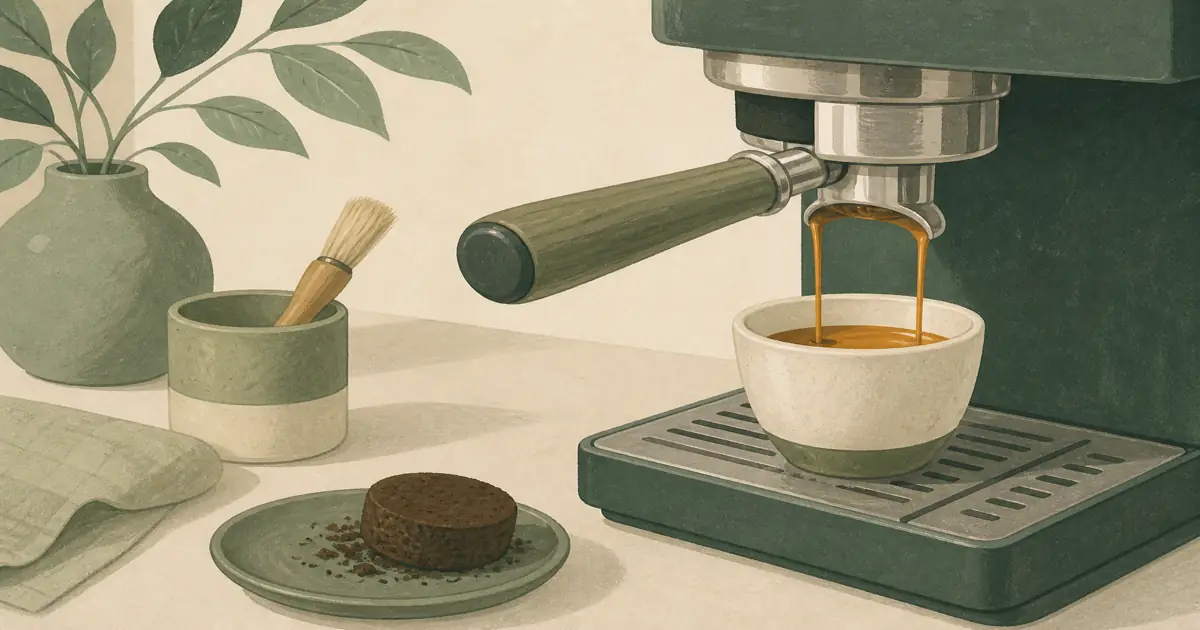
The short answer: A bottomless portafilter is a teaching tool. Buy the diameter that matches your group, then watch the flow. Blonding on one side or a sideways jet means the puck needs work, not a new machine.
Our picks
A spouted portafilter hides the extraction. You taste the result and guess. A bottomless portafilter shows the underside of the basket so you can see even flow, early blonding, or an ugly spray that soaks the drip tray.
This guide is research-based from common home group sizes and buyer listings, not a claim we ran every SKU in a lab. Pair it with a burr grinder for espresso and a level tamp. If clumps show up before the tamp, a WDT tool usually helps more than another gadget.
58mm vs 54mm, pick the one that locks in
Wrong diameter is the expensive mistake. The handle will not lock, or it will wobble and leak.
Check the basket stamp or measure across the inside. Do not guess from a lifestyle photo.
The Normcore 58mm E61 bottomless portafilter is the 58mm pick. It ships with an 18g basket on the typical listing, which is enough to start if your machine already uses 58mm baskets.
The Normcore 54mm Breville bottomless portafilter is the home Breville pick. Barista Express, Barista Pro, Barista Touch, and Bambino Plus owners should start here, not with a 58mm “universal” listing.
What you are supposed to see
A decent shot looks like syrup gathering across the basket, then a single stream that darkens and slowly blondes. It does not have to look like a cafe slow-motion reel.
Trouble looks obvious:
- A jet shooting sideways
- One dark patch and one dry patch
- Blonde water from the start
- A donut with nothing in the center
Those are puck problems. Grind, dose, distribution, and tamp. The portafilter is the camera, not the chef.
How to use it without painting the kitchen
First shots will spray. That is normal. Wear a dark shirt. Put a towel on the drip tray.
- Dose the same as your spouted basket unless the new basket is a different depth.
- Distribute. WDT or a light tap so the bed is even.
- Tamp level. A tipped tamp shows up instantly underneath.
- Lock in and start the shot. Watch the first three seconds.
- Stop the shot when it blondes hard, same as you would with spouts.
If every shot is a mess, your grind is too coarse or the dose is too low. Go finer in small steps. If the shot chokes and barely drips, go coarser.
An espresso puck screen can calm shower-screen spray after the puck is already even. It will not hide a bad grind.
Pressurized baskets and beginner machines
Many starter machines ship with pressurized baskets. Those baskets add fake resistance. A bottomless portafilter on a pressurized basket still flows, but you learn less.
If you are on a beginner espresso machine, get the grinder right first. Then swap to a non-pressurized basket that matches the portafilter size. Then the naked view starts teaching.
Cleanup and daily habits
Knock the puck, rinse the basket, wipe the ears. Coffee oils bake onto the exposed basket faster than they hide in a spouted well. A quick rinse after each shot keeps rancid film off the next one.
Do not soak aluminum handles in harsh cleaner overnight. Stainless baskets can take a Cafiza soak. Dry before you store so you are not locking in a rusty ring.
A realistic first week
Day one will look worse than your spouted shots tasted. That is the point. Write down dose, grind click, and what you saw. “Sprayed left” is more useful than “bad.”
By day three, most people find one grind change that turns a jet into a messy cone. By the end of the week, you should see a more even curtain most mornings. If you do not, the grinder cannot go fine enough, or the basket is still pressurized.
Keep the spouted portafilter. Use bottomless when you are changing beans or chasing a sour-bitter mix. Use spouts when you have guests and do not want to mop the machine.
If the ears will not lock, you bought the wrong diameter or the wrong lug pattern. Gaggia, some DeLonghi, and a few Breville 58mm models are not the same as a generic E61 listing. Read the fit line on the Amazon title before you fight the group head.
When to skip it
Skip a bottomless portafilter if you only want cappuccinos and hate extra mess. A spouted portafilter still makes coffee. Buy this when you want feedback, not when you want a prettier handle in photos.
Also skip it if your group is an odd size (51mm, 53mm, some DeLonghi three-ear designs). Buy a listing that names your machine, not a hopeful “universal” title.
Bottom line
A bottomless portafilter shows channeling you were already tasting. Match 58mm E61 or 54mm Breville, keep a towel nearby, and fix grind and distribution before you buy another accessory. The naked view is useful. The spray is the lesson.
More gear and setup notes live on the blog. Start at the homepage for the full guide list.
Frequently Asked Questions
What is a bottomless portafilter?
It is a portafilter with no spouted bottom. You see the full basket underside as espresso flows. People also call it a naked portafilter.
Do I need a bottomless portafilter at home?
No. It is a diagnostic tool. Buy one after your grinder can go fine enough and you are tired of guessing why shots taste sour and bitter in the same cup.
Why does my bottomless portafilter spray?
Channeling. Water found a weak path through the puck. Fix grind, dose, distribution, and a level tamp before you blame the portafilter.
58mm or 54mm?
Match the group, not the photo. Many cafe-style home machines use 58mm. Entry Breville machines often use 54mm. Measure the basket or check the manual.
Will it fit a pressurized basket?
You can drop a pressurized basket in, but you lose most of the point. Bottomless shines with a non-pressurized basket and a real espresso grinder.