How to Backflush an Espresso Machine at Home
Backflushing cleans coffee oils from the group head on machines with a three-way valve. Use a blind disk, a small dose of Cafiza, then rinse cycles before you pull the next shot.
By Nate Brooks
Baristapicks is reader-supported. As an Amazon Associate we earn from qualifying purchases. Learn more.
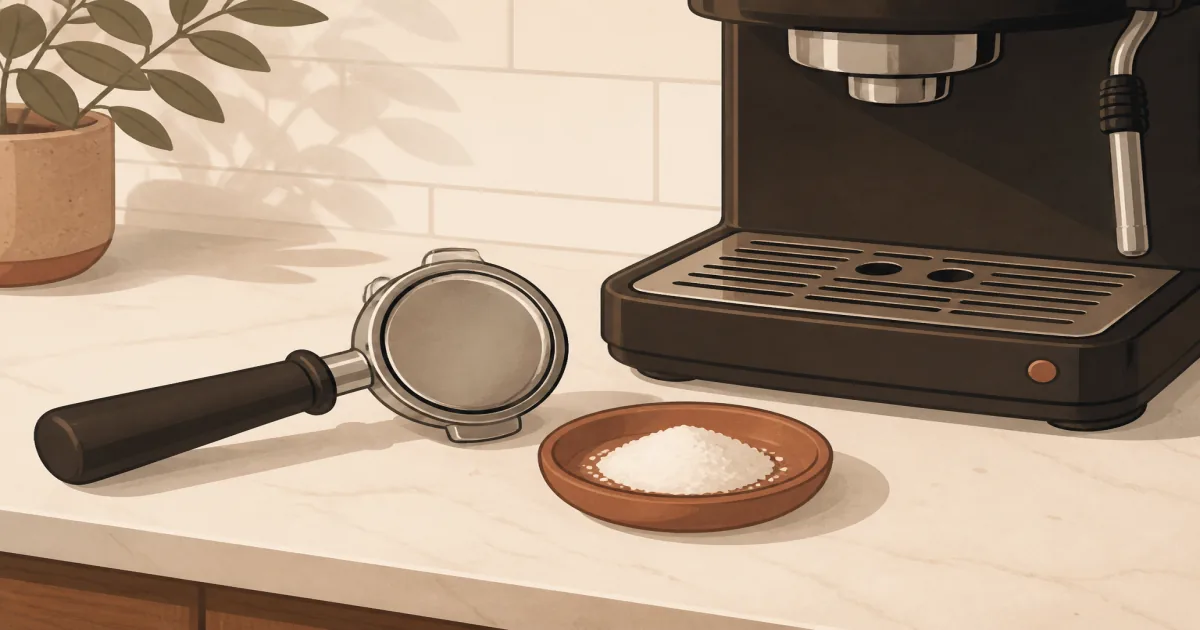
The short answer: (paid link) How to backflush an espresso machine is a sealed portafilter cycle: install a blind disk, add a little Urnex Cafiza (paid link) when you want detergent, run short pump bursts, then rinse with water-only cycles before you brew again.
Our picks
Backflushing is not the same as wiping the group or running a descale. It pushes liquid backward through parts that collect coffee oils, especially on traditional semi-autos with a three-way valve.
More machine care lives in our espresso machines hub. For the wider wipe-down and schedule, start with how to clean an espresso machine. This page is only the backflush job.
Confirm your machine can do it
You need:
- A three-way solenoid valve (common on many prosumer semi-autos).
- A portafilter that takes a solid blind basket or disk.
- An espresso cleaner such as Cafiza, not dish soap.
If your manual says never to backflush, or your machine uses a brew unit and tablets instead, stop here and follow that path. Lever presses and many entry thermoblock machines are not classic backflush designs.
What to buy for the kit
Most machines that support backflushing include a blank disk. If yours is missing or warped, a metal 58mm insert such as the Espresso Supply (paid link) disk is a cheap spare for commercial-size portafilters. Pair it with Urnex Cafiza (paid link) for detergent cycles.
Shop: Urnex Cafiza (paid link) (paid link) · 58mm backflush insert (paid link) (paid link)
Breville 54mm owners need a 54mm blank, not a 58mm disk. Match the diameter before you force anything.
Water-only backflush
Use this after a busy session when you mainly want to clear loose grounds and light oils.
- Remove the normal basket. Insert the blind disk.
- Lock the portafilter into the group.
- Run the pump about 10 seconds, then stop about 10 seconds.
- Repeat that on/off cycle about five times.
- Unlock, rinse the disk, and wipe the group area.
You should hear or see water exit through the valve path on machines built for this. If nothing happens and the machine just strains, stop and recheck the manual.
Detergent backflush with Cafiza
Use this on a slower morning when oils have built up and shots start tasting dull or rancid around the edges.
- Insert the blind disk. Add about half a teaspoon (roughly 3 g) of Cafiza, or the dose on the jar.
- Lock in and run the same 10-seconds-on, 10-seconds-off pattern about five times.
- Remove the portafilter. Rinse the disk and the face of the group.
- Put the clean blind disk back with no powder. Run five more water-only cycles to flush detergent.
- Reinstall a normal basket. Pull one shot and discard it.
Never skip the rinse cycles. Cleaner left in the group will ruin the next drink.
Soak the metal parts while you are at it
Hot water with a little Cafiza is a good soak for baskets, the blind disk, and metal portafilter bodies. Keep wooden or plastic handles out of the bath. Rinse well and dry before the next use.
What backflushing does not fix
Mineral scale inside boilers and tanks needs descaling, not Cafiza. Sour milk residue on steam wands needs daily wiping and purging. Channeling from a bad grind needs distribution and a better mill, not more detergent.
If shots still taste off after a clean backflush and rinse, check beans, grind, and dose before you buy another cleaner.
A simple home schedule
Write the detergent day on a calendar. Out of sight cleaners become annual emergencies.
If you pull mostly straight espresso, oils still build. If you pull a lot of milk drinks, wipe the wand every time and keep the group schedule anyway. Milk and coffee oils are different messes. Treat them separately.
Travel weeks are a good time to run detergent before you leave, empty the drip tray, and leave the machine clean. Coming home to a sour group is how people decide espresso is too much work.
Troubleshooting the cycle
If the portafilter sprays or will not lock with the blind disk, the disk diameter is wrong or the lip is sitting high. Do not force it. Swap sizes or use the blank that came with the machine.
If the pump sounds strained and no water exits the valve path, stop. Some machines need a specific cleaning mode button instead of a normal brew switch. Read that page of the manual before you invent a workaround.
If shots taste soapy after detergent, you under-rinsed. Run more water-only cycles, wipe the group, and discard another blank shot. Flavor should return to normal quickly once the cleaner is gone.
If the blind disk sticks in the group when you unlock, wait a second for pressure to drop, then wiggle gently. Yanking a pressurized handle is how gaskets get bruised.
Bottom line
How to backflush an espresso machine is a short sealed cycle with a blind disk, optional Cafiza, and a thorough water rinse. Confirm the three-way valve, match your basket size, and discard the first shot after detergent. Pair this with normal wipe-downs and a separate descale plan, and the group stays tasting like coffee instead of last month’s oils.
Machines such as a Gaggia Classic Pro or Rancilio Silvia are the usual home candidates for this routine. Compact thermoblock boxes and many super-autos are not. When in doubt, the manual’s cleaning chapter beats a generic blog step.
More guides live on the blog. Start from the homepage when you are sorting the rest of the kit.
Frequently Asked Questions
What does backflushing an espresso machine do?
It forces water (and detergent, when you use it) back through the group head and three-way valve to loosen coffee oils and grounds you cannot wipe from the outside.
Can every espresso machine be backflushed?
No. You need a three-way solenoid valve and a portafilter that accepts a blind basket or disk. Many super-automatics use tablet cycles instead. Follow your manual.
How often should I backflush at home?
Water-only cycles can be frequent after heavy milk-drink days. Detergent backflush is often weekly for daily users, or every few weeks for lighter use. Your manual wins if it gives a schedule.
Is Cafiza the same as descaler?
No. Cafiza targets coffee oils. Descaler targets mineral scale in tanks and boilers. Most homes need both on different jobs. See how to descale.
What if my machine is 54mm, not 58mm?
Buy a blind disk or blank basket sized for your portafilter. The cleaning steps are the same; the diameter has to match.
Can I use dish soap or baking soda?
Skip them. They can leave residue, smell, or stress gaskets. Use an espresso machine cleaner made for backflushing.
Should I drink the first shot after cleaning?
No. Pull one sacrificial shot after the rinse cycles and discard it so any leftover cleaner taste is gone.