How to Clean a Moka Pot Without Ruining the Gasket
A moka pot needs a rinse after every brew, a dry funnel, and an occasional gasket check. Skip harsh cleaners and do not put aluminum parts in the dishwasher.
By Nate Brooks
Baristapicks is reader-supported. As an Amazon Associate we earn from qualifying purchases. Learn more.
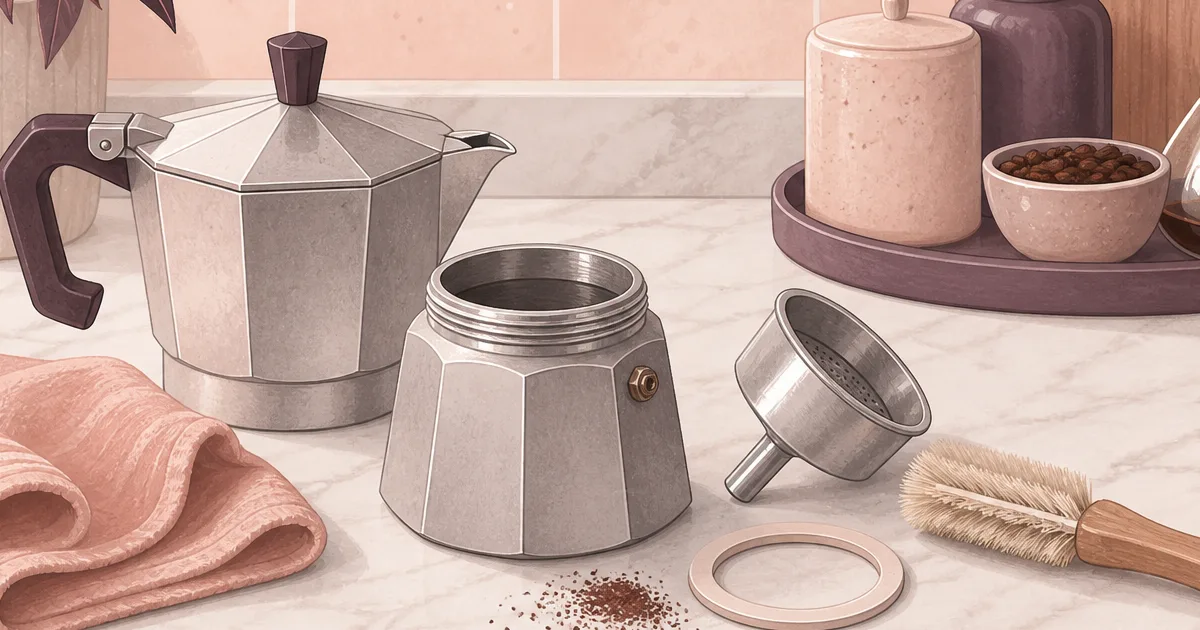
The short answer: Rinse a moka pot with hot water after each brew, brush out the funnel and filter plate, dry every part, and replace the gasket when it hardens or leaks.
Our picks
A moka pot does not need a complicated cleaning routine. It does need one you actually follow. Coffee oil and damp grounds collect in the funnel, under the filter plate, and around the gasket. Leave them there long enough and your next brew can taste stale before it reaches the cup.
This is a dedicated care guide for a moka pot after you own one. For choosing a size, heat source, and first pot, see our best moka pot guide. The cleaning job is narrower: keep the coffee path clear and do not damage the soft gasket that seals the two halves.
Rinse it while it is still warm
Let the pot cool until you can handle it safely, then unscrew the top. Empty the used grounds from the funnel basket. A gentle tap into the compost or trash is enough. Do not gouge at the aluminum with a knife.
Rinse the boiler, funnel, upper chamber, and filter plate with hot water. The goal is to remove loose grounds and fresh coffee oil before they dry. If the funnel has grounds stuck in its tiny holes, use a soft brush or toothbrush. A wooden toothpick can help around the rim, but do not force anything through the pressure path.
Turn the parts upside down on a towel and let them dry separately. Do not screw the pot back together wet. Trapped moisture creates musty smells, and it can leave mineral marks in the boiler.
Clean the gasket and filter plate
The rubber or silicone gasket sits beneath the filter plate in the upper chamber. It is small, but it determines whether the pot seals properly. If steam leaks from the side during a brew, the gasket is one of the first things to inspect.
Gently remove the gasket and filter plate only when they need a deeper clean. Wipe both with hot water and a soft cloth. If there is stubborn coffee oil, use a small amount of mild unscented dish soap, then rinse until no scent remains. Strong lemon, floral, or heavily perfumed soap can make the next coffee taste odd.
Look at the gasket under good light. Replace it if it is flat, stiff, cracked, or permanently stained with old coffee. A fresh gasket costs much less than a new pot and solves a surprising number of weak-brew and side-leak problems.
The Bialetti Moka Express, 6-Cup is a practical example because replacement gaskets and funnels are widely available. It is a research-based product mention drawn from its current US listing and buyer feedback, not a claim that every kitchen needs the same size.
What not to put in a moka pot
Avoid the dishwasher for classic aluminum pots. Dishwasher detergent can dull the surface, darken the aluminum, and leave residue in the coffee path. Do not use oven cleaner, bleach, scouring powder, or a wire brush. A moka pot is not a burned roasting pan.
Do not store coffee grounds in the funnel after brewing. Do not leave water sitting in the boiler overnight. Both habits create stale flavors and make a simple rinse much harder the next day.
If mineral scale forms in the boiler, use the maker's recommended method. A brief diluted vinegar rinse is often suggested for aluminum cookware, but check your exact manufacturer's instructions first and rinse thoroughly afterward. A harsh soak can do more harm than a little scale.
Check the safety valve without fussing with it
The valve on the lower chamber is a safety part, not a decorative screw. Keep the outside clean and make sure the opening is not blocked by old coffee or mineral buildup. Do not jab it with a needle or take it apart unless the manufacturer tells you how.
If the valve is leaking, stuck, or damaged, stop using the pot until you can replace or service it. A moka pot should brew with a gentle rise and a quiet finish. It should not hiss from the seam or spray coffee around the stove.
Before you brew again, wipe the threads where the upper and lower chambers meet. Grounds caught there can stop the gasket from sealing evenly. A clean dry thread also makes it easier to feel when the pot is properly tightened, without forcing the handle.
A simple care schedule
After every brew, rinse the parts, empty the funnel, and dry them separately. Once a week, look under the filter plate and wipe the gasket. Every month or two, inspect the gasket and valve, especially if you use the pot daily.
Coffee made in a moka pot is stronger than drip but it is not espresso. Using the right grind and heat matters as much as cleaning. Our coffee grinder guide can help if your coffee is consistently muddy or weak, while the moka pot guide covers a better starting recipe.
Bottom line
Clean a moka pot with hot water, a soft brush, and a dry towel. Keep soap and abrasive cleaners to a minimum, inspect the gasket often, and store the pot dry. These small steps protect the flavor and the seal without turning your morning coffee into a maintenance project. Find more practical brewing help on the blog or at the Baristapicks homepage.
Frequently Asked Questions
Can I use dish soap on a moka pot?
A little mild soap on the exterior or removable parts is fine when needed, but rinse thoroughly. Avoid leaving scented soap residue on the gasket or coffee path.
Can a moka pot go in the dishwasher?
Most aluminum moka pots should stay out of the dishwasher. Detergent can discolor aluminum and leave a taste behind.
How often should I replace a moka pot gasket?
Replace it when it looks cracked, flattened, hard, or when steam leaks from the seam during brewing.
Why is there mold in my moka pot?
Moisture was trapped inside. Wash it, dry every part fully, and store it loosely assembled so air can circulate.
Should I clean the safety valve?
Yes. Keep the valve opening clear and follow the maker's instructions. Never poke it aggressively with a hard object.
Why does my moka pot coffee taste bitter after cleaning?
It may have soap residue, old oil in the funnel, or too much heat during brewing. Rinse well and check your heat next time.