Semi-Automatic vs Super-Automatic Espresso Machines: Which Fits Your Morning?
A semi-automatic gives you more control over each shot. A super-automatic saves time and mess. The right choice is mostly about the mornings you have.
By Alex Turner
Baristapicks is reader-supported. As an Amazon Associate we earn from qualifying purchases. Learn more.
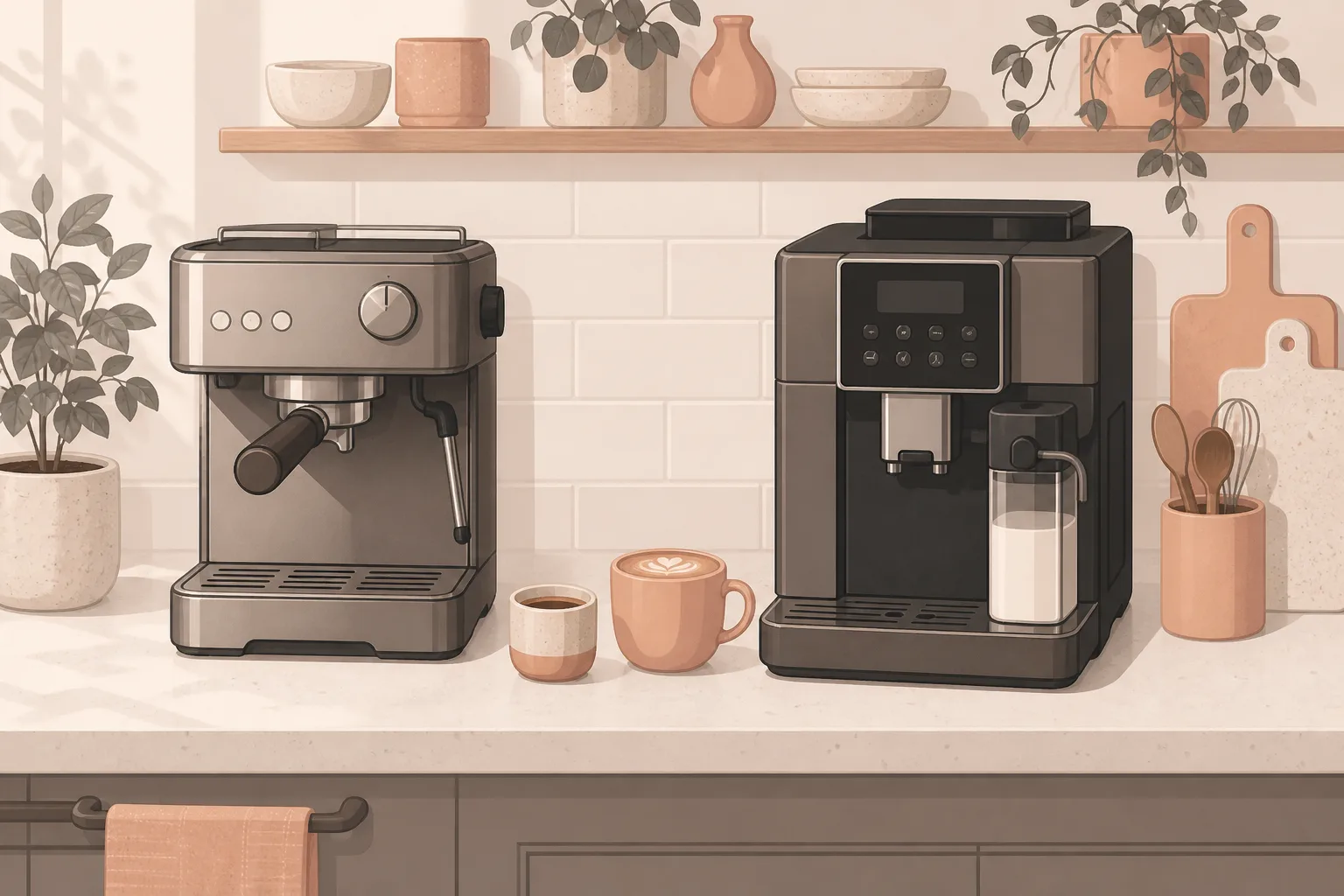
The short answer: Choose a semi-automatic if you want to control the grind, dose, and shot. Choose a super-automatic if getting coffee quickly matters more than learning the process.
Our picks
Semi-automatic vs super-automatic espresso machines is not really a contest between serious coffee people and everybody else. It is a choice between two different jobs. One asks you to make the drink. The other asks you to keep the machine stocked and clean.
Both can make a satisfying cappuccino before work. The wrong one is the one that turns your morning into a task you stop doing after two weeks.
This guide is research-based, using current US Amazon listings, manufacturer specs, and recurring buyer feedback. We have not lab-tested every machine. If you are still comparing models, start with our best espresso machine guide.
What a semi-automatic asks you to do
A semi-automatic uses a portafilter. You grind coffee, put it in the basket, level it, tamp, lock it in, and start the shot. Then you steam milk with a wand or use an assisted system.
That sounds like a lot when you read it as a list. In practice, it becomes a small routine. The payoff is that you can change the grind, dose, shot time, and milk texture when a coffee tastes off. You can make a better cup as your skills improve without replacing the whole machine.
The Breville Bambino Plus is a good example of the semi-auto path. It heats quickly and has milk assistance, but it still depends on the grinder and coffee you give it. That is a feature if you like control. It is a nuisance if you just want caffeine before a meeting.
What a super-automatic does for you
A super-automatic keeps the grinder, brewer, and usually the milk system inside one box. Add beans and water, select a drink, and it grinds, doses, brews, and drops a puck into an internal bin. Some make milk drinks from a carafe with one button.
The De'Longhi Magnifica Evo is this kind of machine. It reduces the number of choices you make before coffee, which is exactly why many busy homes prefer it. You lose some fine adjustment, but you gain a faster, cleaner routine.
Do not confuse push-button coffee with no-maintenance coffee. You still empty the puck bin and drip tray. Milk carafes need a rinse after use. The brew unit and water path need the cleaning schedule in the manual. A super-auto hides the work. It does not remove it.
Taste control versus speed
Here is the practical split:
A semi-auto can be more rewarding because espresso responds to small changes. A new bag may need a slightly finer grind. A shot that runs fast may need a little more resistance. You have the tools to fix it.
A super-auto makes those decisions simpler. Its grinder has fewer useful steps, its brew chamber is smaller, and its recipes are designed for consistency rather than tinkering. That is not a flaw. It is the trade you are paying for.
If you drink straight espresso and notice every change in a bag of beans, start with a semi-auto and an espresso-capable burr grinder. If you mostly want a latte that arrives quickly and tastes reliably good, a super-auto is often the more honest choice.
Counter space, noise, and cleanup
Semi-autos can be compact, but they often need a grinder beside them. Plan for two appliances, a knock box, and some counter space for dosing. You will also have coffee grounds around the portafilter. A small towel fixes most of that.
Super-autos use one footprint, although many are deeper than they look. Leave space above the hopper lid and in front of the machine for the drip tray and grounds bin. They make less loose mess, but the internal parts are more complicated.
Noise is a draw. Both use pumps and grinders. A super-auto runs its grinder, brewer movement, and rinse cycle in one go. A semi-auto lets you control when those sounds happen. Apartment buyers should measure depth and think about their wall-sharing mornings, not only the machine width.
For either style, filtered water and regular cleaning matter more than a fancy finish. Our espresso machine cleaning guide covers the basic routine.
Cost and upgrade paths
A semi-auto price is only part of the purchase. A machine without a capable grinder can be frustrating, so include the grinder in your budget from the start. The upside is that you can upgrade one piece at a time. Keep the machine and buy a better grinder later, or do the reverse.
A super-auto costs more up front because it combines those parts. It is a complete path, but repairs can be more specialized once the internal brew group or milk system gets older. Buy a model with a clear manual, accessible replacement parts, and a milk routine you will really follow.
Neither path needs every accessory on day one. Fresh beans, a basic scale for semi-auto shots, and a cleaning plan matter more than a drawer of gadgets.
How to choose without overthinking it
Pick a semi-automatic if you enjoy hands-on cooking, can spend a few minutes on coffee, and want to improve your shots over time. The learning curve is real, but it is manageable when you change one variable at a time.
Pick a super-automatic if several people use the machine, mornings are rushed, or you know nobody will tamp and steam milk every day. Convenience is a valid reason to buy a machine.
The best semi-automatic vs super-automatic espresso machine decision is the one that fits a normal Tuesday. Browse more buying help on the Baristapicks blog, or return to the homepage to compare the rest of a home setup.
Frequently Asked Questions
Is a super-automatic easier to clean than a semi-automatic?
It is easier at the portafilter stage because there is no loose puck to knock out. You still need to empty grounds, rinse milk parts, and descale it on schedule.
Can a beginner use a semi-automatic espresso machine?
Yes. Start with a forgiving medium roast, a capable grinder, and a simple recipe. It takes a few mornings to learn, not a barista course.
Which type makes better espresso?
A well-dialed semi-automatic has more potential for taste control. A super-automatic can make a good everyday cup with much less effort.
Do super-automatics need a separate grinder?
No. Their built-in grinders are part of the convenience. Buy a semi-auto plus a separate grinder when you want finer control.