Third Wave Water for Espresso: When Mineral Packets Help
Third Wave Water for espresso is a mineral packet you add to distilled or RO water. Use it when your tap water is too hard, too soft, or a mystery, and you want a repeatable tank fill.
By Harper Lin
Baristapicks is reader-supported. As an Amazon Associate we earn from qualifying purchases. Learn more.
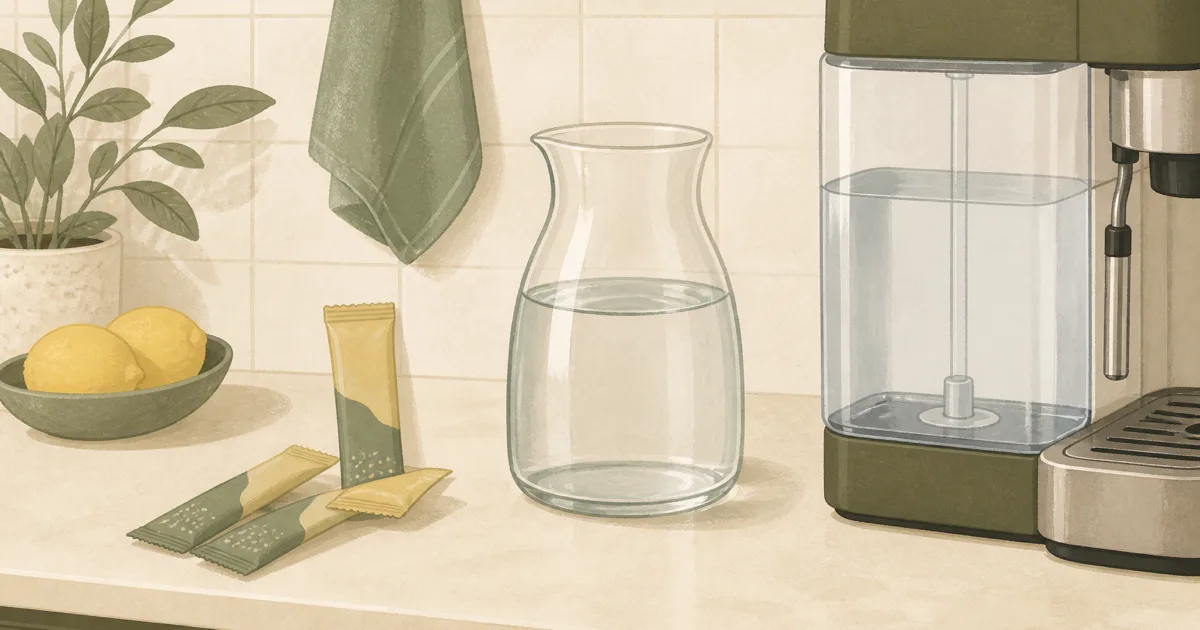
The short answer: Third Wave Water for espresso is worth it when you can start from distilled or RO water and want the same mineral mix every tank fill. It is not a magic taste upgrade on already-good filtered tap water, and it does not replace descaling.
Our picks
Home espresso is picky about water. Too hard, and scale builds in the boiler. Too soft or distilled with nothing added, and extraction can taste flat, and some machine makers warn about corrosion. Third Wave Water sits in the middle: you buy a blank base, then add a known mineral packet.
This is a practical buying and mixing guide from the product directions and buyer patterns, not a water-lab report. If your machine uses a branded tank cartridge, start with the water filter replacement page. Packets do not plug into a Breville filter slot.
When packets help, and when they do not
Use espresso-profile packets if:
- Your tap water is very hard, or you already descale more often than the manual suggests.
- You only have distilled or RO water and the coffee tastes hollow.
- You want the tank to be a repeatable recipe instead of "whatever came out of the faucet today."
Skip them if:
- Your city water is already in a moderate hardness range and shots taste fine.
- You will not buy distilled or RO water. The sticks are not a tap-water additive.
- You expected a filter you drop into the reservoir like a Brita.
Scale still happens if you cheat and mix packets into hard tap water. Follow the base-water rule.
Kit item 1: one-gallon espresso sticks
Third Wave Water Espresso Profile, 12 Count is the default home kit. Each stick is meant for one gallon of distilled or RO water. That matches a small jug you can keep next to the machine and pour from.
Mix a batch, then fill the tank from the jug. Do not dump a packet straight into a half-full tank of tap water. Label the jug so nobody "tops it up" from the sink.
Twelve gallons is a lot of espresso water for one person. It is a reasonable box if you brew daily or you share the jug with a kettle. If the box will sit for a year, buy the size you will actually mix.
Kit item 2: five-gallon sticks
Third Wave Water Espresso Machine Profile, 5-Gallon Sticks makes sense when you already store water in a larger container, or you hate opening a packet every gallon. Same idea, bigger dose.
A five-gallon jug is awkward in a small apartment. If you do not have floor space for it, stay with the one-gallon sticks. Convenience dies when the container does not fit under the counter.
Confirm you are buying the espresso machine profile, not a classic brew profile meant for pour-over. The listings look similar in a search grid.
How to mix without turning it into a science project
Use a clean jug that never held soap residue you can still smell. Fill it with distilled or RO water to the volume on the packet. Add the stick. Cap and shake until you do not see undissolved powder.
Let bubbles settle, then fill the machine tank. Run a short rinse through the group if the machine has been sitting with old water. Keep a simple schedule: mix on the weekend, fill during the week, empty the tank if you leave town.
Do not mix a month of water in an open pitcher on a warm counter. Treat it like drinking water. Keep it covered.
If the packet does not dissolve, the water was probably too cold or the jug was not shaken enough. Give it another 30 seconds. Do not dump extra packets into the same gallon to "make it stronger." The recipe is already a mineral target. More is not better, and it can push hardness into scale territory.
Write the mix date on a piece of tape on the jug. If you forget whether yesterday's water was treated, mix a fresh gallon. Guessing is how people end up with a tank of mystery liquid and a machine that tastes different every morning.
Packets vs filters vs descaling
A machine cartridge is a physical filter in the tank. Packets are minerals you add to empty water. Descaling is a separate acid cycle that removes scale that already formed.
You can use a cartridge and still care about incoming hardness. You can use packets and still descale on a calendar. You still clean the group and wand. Water chemistry is one chore, not the whole maintenance list.
If shots taste great on your tap water and descaling is rare, do not create a water hobby. Buy better beans or a better grinder first. Water is the upgrade after the basics are stable.
Machine manuals still win. If Breville, Gaggia, or De'Longhi tells you to stay inside a hardness range, stay there. Packets are a way to land in that range on purpose when tap water will not. They are not permission to ignore the booklet that came in the box.
For a first home espresso setup, water is usually the third purchase, not the first. Get a machine you will use, a grinder that can do espresso, and beans you will finish. Then fix the tank if shots taste dull or scale shows up fast. The best espresso machine guide is the place to start if the chassis is still undecided.
Bottom line
Third Wave Water for espresso is a repeatable mineral mix on top of distilled or RO water. Start with the 12-count espresso profile unless you already refill a large jug, in which case the 5-gallon sticks cut down on packets. Keep descaling on the calendar, and do not add sticks to hard tap water. More machine-care notes live on the Baristapicks blog, and the homepage is the short path back to machines.
Frequently Asked Questions
What is Third Wave Water for espresso?
A mineral packet mixed into distilled or reverse-osmosis water so your tank is not empty of minerals and not full of mystery scale.
Do I still need a machine water filter?
If your machine takes a cartridge, follow the manual. Packets and cartridges solve different jobs. See our espresso machine water filter guide.
Can I use Third Wave Water with tap water?
No. The recipe assumes a blank base. Adding it to already-hard tap water can make scale worse.
Will this stop me from descaling?
It can slow scale if you were using hard tap water, but it does not replace cleaning. Keep a descale routine.
Is espresso profile the same as the classic profile?
No. The espresso profile is mixed for machine boilers. Use the packet the listing names for espresso, not a random brewing profile.
How do I mix a batch?
Fill a clean jug with the matching volume of distilled or RO water, add one stick, cap, and shake until it dissolves. Then fill the machine tank from that jug.
Is bottled spring water a substitute?
Sometimes, if the bottle lists a moderate mineral content and your machine maker allows it. Spring water varies by brand. Packets are for people who want the same jug every time.